
Two EU-backed projects charged with furthering the development of wave energy systems along the Atlantic seaboard are making strong progress.
The projects have already recently completed a number of tasks, including the further environmental monitoring of wave energy devices off the coast of Portugal.
NON-TECHNOLOGICAL BARRIERS
The key objective of the Wave Energy in Southern Europe (WESE) and Streamlining the Assessment of Environmental Effects of Wave Energy (SafeWAVE) projects - funded through the European Maritime and Fisheries Fund (EMFF) - is to address a range of non-technological barriers that could hinder the future development of wave energy in the EU. These include those related to: environmental risk and uncertainty about the potential environmental impacts of wave energy developments, the need for a coordinated Maritime Spatial Planning (MSP) approach to overcome potential competition and conflicts between wave energy and other marine users, the lengthy and complex consenting processes, and opposition to future wave energy deployments amongst communities.
As Juan Bald, general coordinator of the WESE and SafeWAVE projects and Head of Marine and Coastal Environmental Management at AZTI, explains, this will be achieved through three different strategies. Firstly, an Environmental Research Demonstration Strategy based on the ‘collection, processing, modelling, analysis and sharing’ of environmental data collected at wave energy sites in several European countries where wave energy converters (WECs) are currently operating. Secondly, a Consenting and Planning Strategy to provide guidance to ocean energy developers and licensing authorities, as well as Decision Support Tools (DSTs) to help stakeholders obtain a suitability index for site identification and selection of future wave energy deployments for most EU countries in the ‘Atlantic Arch,’ including Portugal, Spain, France and Ireland. Thirdly, a Public Education and Engagement Strategy to work collaboratively with coastal communities in France, Ireland, Portugal and Spain and co-develop and demonstrate a framework for education and public engagement in marine renewable energy to ‘enhance ocean literacy and improve the quality of public debates.’
ONLINE TOOLS
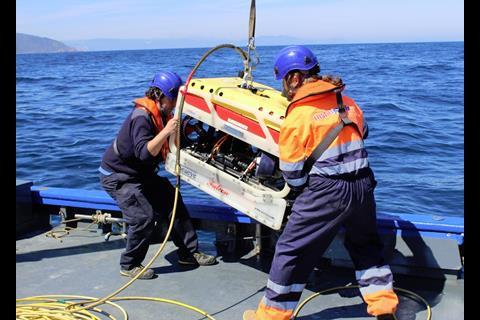
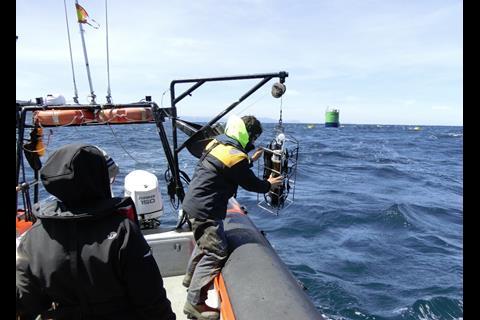
Since the SafeWAVE project only launched is activities in October 2020, most of the activities that have been carried out so far have been under the auspices of the WESE project. Key achievements so far include monitoring of the IDOM MARMOK-A-5 device at the Biscay Marine Energy Platform (BIMEP) test site, as well as the Mutriku Wave Power Plant in Spain and the AW Energy WaveRoller device in Peniche, Portugal.
In other developments, the MARENDATA online data platform for the sharing of environmental data has been developed and launched, a stakeholder database and review of the consenting processes in Spain and Portugal has been completed. Two open-access web-based applications – the WEC-ERA (Wave Energy Converters Ecological Risk Assessment) and the VAPEM (Ecological Assessment and Marine Spatial Planning) tools have also been launched.
Looking ahead, Bald reveals that the WESE team will spend the rest of this year translating the experience and lessons learned during the various monitoring programmes into guidelines and modelling activities that enable stakeholders across the wave energy sector to better understand what he describes as ‘the potential cumulative pressures and environmental impacts of future WE deployments at larger scale.’
“All this information will be shared in the MARENDATA data platform. Based on the results of previous tasks, guidance will also be developed for Spain and Portugal aimed at describing the various steps of the licensing process of WE projects to be located in the continental coast,” he says.
“Suitability maps for WE deployment in Spain and Portugal will also be created thanks to the DSTs of MSP that have been developed. All the results will be presented in a final event. The place and dates of this final event is still under discussion due to the COVID crisis but we will try to do it in the framework of the EWTEC21 conference in September 2021,” he adds.
Meanwhile, the SafeWAVE project, which runs from 2020-2023, will ‘take up the baton of the WESE project’ and continue the activities of the earlier initiative - extending its field of action to France and Ireland, as well as to new wave energy technologies, more advanced monitoring methodologies and new activities focused on the development of a Public Education and Engagement Strategy.
By Andrew Williams