



US based shipbrokers Marcon International is well known worldwide for its special interest in tugs and barges. Although its business is very much orientated towards the American market, Marcon maintains a massive database of tugs and towage activity worldwide and its comprehensive and widely distributed Newsletters have become legendary.

President Bob Beegle agreed to give Maritime Journal his view of how the tug market is surviving in the current economic situation. His view is as follows.
‘With the steep decline in the global economy, the number of tugs worldwide for sale or charter has grown over the last six months and expected to continue through at least mid-2010. The average age of tugs listed worldwide for sale has also decreased slightly, reflecting more newbuilding resales on the market. 4,000 to 8,000hp azimuthing and tractor tugs have appeared on the charter market for the first time due to delays in completion of LNG terminals and other projects.
‘Prices have also started to slip slightly during the first quarter of 2009. The premium asked for, and many times secured during the boom years has been knocked off the top, but do not expect to see fire-sales of good equipment. Tugs are maintaining value compared to other vessels. The towing industry has not experienced the downward spiral of 1984/5, when creditors priced vessels lower and lower to attract the few buyers in the industry. A 12 year old 5,750bhp US flag tug was sold by creditors in 1988 for $450,000. In today's dollars, that would equal $807,158. There are no 5,000 to 6,000bhp tugs of any age for sale for even twice that price.
‘Tug newbuildings are expected to taper off the third quarter 2009 due to the financial crisis, cancellation of some options and delivery of vessels close to completion. Ageing tonnage and technology are two factors, though, which will buoy future construction. An owner can only support an old tug's economic lifespan for so long, even with life extension programmes, re-powering and enhanced maintenance. Approximately 35% of today's world seagoing fleet was built before 1980 and most are quite different boats to those that are in demand at present. Today's second hand market cannot completely fulfill the demand.
‘US shipyards built on average 59 tugs per year from 1975 through 1982. This fell to 22 in 1983 and only 7 were delivered in 1984. It is unlikely that 2010 will see this same crash in tug construction. There is not the same flood of surplus second hand tugs at bargain prices on the market now as we saw in the 1980s and those now being offered are not what is required. High bollard pull and smaller tugs operated by fewer crew are becoming the norm.
‘It is difficult to convert a 1970s or 1980s built tug to meet today’s requirements, especially for ship assist/escort work or to handle the large double hull tank barges now replacing single skin petroleum barges worldwide. Another niche market is for tugs capable of working barges in shallow rivers that can also make short coastwise voyages. Only a limited number have been built in last 25 years and most are either too old or not for sale, so new vessels are required.
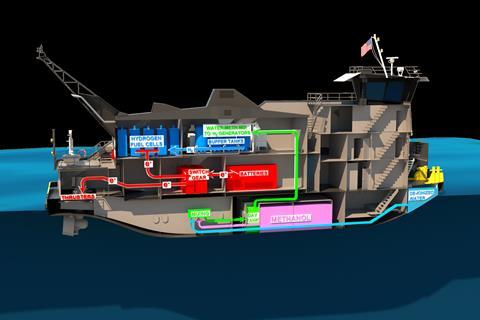
‘The towing industry will survive this recession and operators will need modern, powerful and efficient tugs to compete. Ports worldwide are being pressured to reduce pollution. The ongoing economic crisis may slow some ‘green’ programs but is unlikely that ports can or will turn their backs on a long term clean air policy. Need for lowering emissions will likely support re-powering many tugs, but there comes a time to baulk at pouring another million dollars or more into a thirty year old hull. Each longevity programme and re-powering has to be carefully examined on a case by case basis. Design work continues on new tug designs using alternative fuels, such as bio-diesel and natural gas, and propulsion systems, from Tier 3 conventional diesel to diesel-electric hybrid and hydrogen fuel cells. There is no one solution that will fit all tugs or all ports but each technology is worth exploring.’