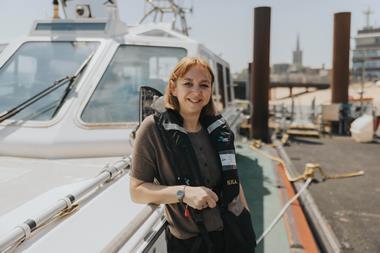



Volvo Penta’s head of Marine Business has officially introduced its new IPS Hybrid for commercial vessels at the Seawork exhibition and conference in Southampton this week.
Hanna Ljungqvist told delegates at an event at Seawork for ‘close customers and partners in industry’ that the company’s much-touted integrated hybrid electric propulsion system was now available for order in the commercial marine sector.
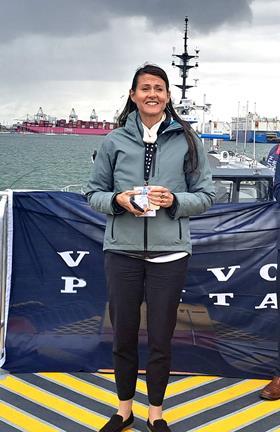
”We are taking the next step and the first step into electric drive solutions with the industry’s most integrated hybrid electric solution for commercial marine, our D13 hybrid platform.”
“By the end of this year we will start production,” she told Maritime Journal in an interview after the announcement. “Next week we are open for orders.”
The new IPS Hybrid has been developed for a wide range of commercial applications including passenger ferries, coast guard vessels, CTVs, inland waterways and of course workboats.
One of the key principles of Volvo Penta’s designing is simplicity as well as functionality.
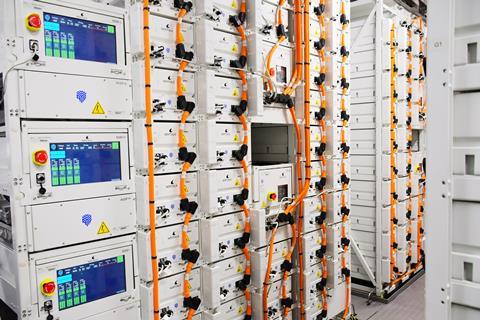
“By delivering a fully integrated helm-to-propeller package through one supplier, the system helps reduce complexity across installation, operation and service,” the company says. ”Propulsion, batteries, controls and energy management are designed to work together as one cohesive package. This gives operators a clearer maintenance path, fewer interface touchpoints, and one point of responsibility across the full system.”
With more than 40,000 operational IPS drive units delivered, the IPS hybrid moves a step further.
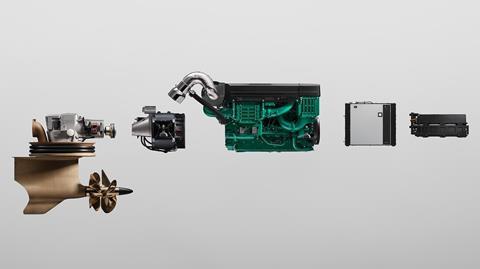
“We are leading the industry, the first one to provide a fully integrated system from propeller to helm,” said Ljungqvist. “It has the infrastructure but you can take out the gensets and put in more batteries as they become available. And we have fully electric in the pipeline.
“I think we thought five years ago that the transition would be quicker, and it’s the same with the automotive and transport industries. But the acceleration pace has not been as fast as we thought.
“We need to start where there are customers. The technology is now fully mature but in parallel we have also seen in general from customers to customers, the pace is down a little bit on their acceleration.
“We want to push the boundaries but at the same time we need to feel there are customers ready to jump on to it.”