

Resilience has emerged as a keyword in today’s maritime security climate. Global economic, social and political unrest has rapidly transformed the risks and threats to seafaring industries, with incidents growing in number and sophistication over the past few years.

Industry leaders agreed in 2025 that maritime security extends beyond protecting vessels from petty malicious activities. The rising concerns about organised groups using sophisticated techniques and technologies to carry out attacks are affecting overall efficiency at crucial ports.
Traditional reactive security models may no longer be effective where incidents against supply chains can have long-lasting, far-reaching consequences. Building more resilient security is now a primary objective for many maritime organisations worldwide.
Evolving threats
Understanding the current maritime security landscape is imperative to forging an effective security strategy. Piracy, port attacks and vessel hijacking attempts are on the rise, raising alarms for organisations as they face more costly disruptions to their operations.
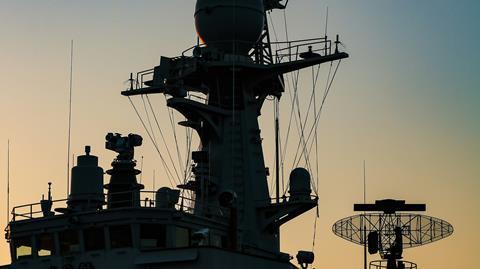
The International Maritime Bureau (IMB) published a report citing 137 pirate attacks on vessels in 2025, increasing from the previous year. While most were low-level, the trend underscores the rising number of incidents that could snowball into severe disruptions.
But again, the scope of today’s maritime security goes beyond organised attacks against infrastructure. Port disruptions due to extreme weather events were another significant concern, with studies concluding that natural disasters can cause billions in losses.
These incidents are evolving in scale and frequency, making reactive responses no longer a viable strategy for protecting people and property in the maritime industry. Being proactive in detection and response can help mitigate incidents to minimise their impact.
Stacking technologies
Stacking proactive maritime security technologies can be the ticket to a strategy that secures seafaring operations for the next decade. Where video security cameras at ports, ships and warehouses have traditionally led the line in identifying and responding to threats, leaders can leverage more advanced technologies to upgrade to more comprehensive security.
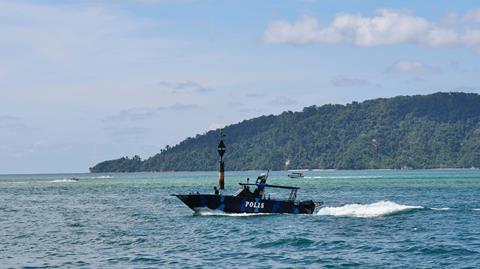
Maritime organisations face greater vulnerability gaps, with the number of incidents growing in complexity across facilities and vessels.
Scalability, adaptability and flexibility are pivotal factors in technology stacks that help build more resilient maritime security.
Improving visibility through implementing modern observation hardware and software can provide the layers needed to address the current maritime security climate. Rugged video cameras can extend visual capabilities, smart sensors can help secure perimeters and AI-assisted data analytics can continuously provide deep insights for improvement.
Strategic resilience
”Ports of the future” is a concept at the top of many industry leaders’ agendas in maritime summits. The idea is to enhance facilities with smart technology to improve productivity and safety, even with limited resources.
The visualisation of future ports aligns with current needs to create a more resilient security strategy. Leaders envision an “always on” approach to address the many productivity and efficiency challenges maritime facilities face, which share the same proactive security needs.
Again, resilience is the keyword in both strategies, where stacking proactive observation technologies can help facilitate solutions. Ports, as critical hubs in the supply chain, can use smart sensor data to identify potential productivity obstructions. Maritime security teams can use thermal optics to detect threats in low-visibility conditions.
The unified approach can strengthen vulnerable areas while continuously feeding data to identify gaps in maritime security and productivity. The technologies can work in tandem to help provide the desired resilience for ports and vessels.
Decade-ready solutions
Over ten years ago, leaders agreed that early planning in port development was a significant measure of success. However, the implementation of technologies lagged because maritime organisations traditionally adopted reactive strategies for both security and productivity.
The need for proactivity in operations remains, given the rapidly evolving challenges the maritime industry continues to face. Advanced maritime technologies can offer an excellent opportunity to achieve that strategic approach, as their data-driven capabilities enable organisations to scale and adapt to changing needs.
While there may be organisational obstacles to stacking technologies, such as limited resources or legacy systems, the benefits can quickly outweigh these concerns. A decade-ready maritime strategy scaling with a volatile industry climate is the resilient operational asset leaders seek.