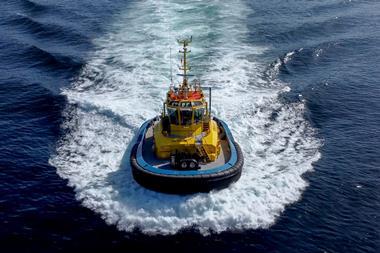
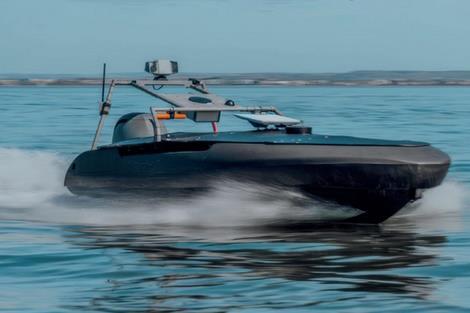


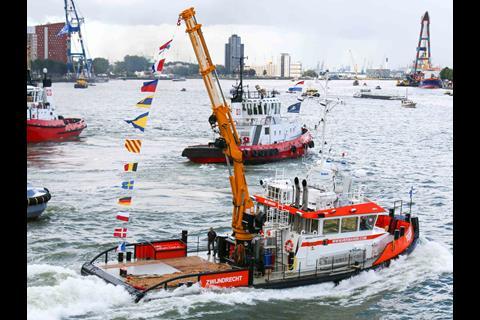
Boston USA-based Sea Machines Robotics is supplying a remote helm control system for Herman Sr. BV’s Shoalbuster tug ‘Teddy’.
It is said that tug masters spend more time looking behind them than ahead. Ensuring best possible all-round visibility from the wheelhouse is always a conundrum for tug designers, funnels often introducing blind arcs with cleverly shaped exhaust extensions aligning with window frames and thus reducing blind zones.
Duplicated aft wheelhouse and bridge wing controls improve visibility, but particularly where work involves cranes and winches, safety and efficiency can be compromised with the operator positioned at a fixed location. Wirelessly controlled remote user interfaces are already common on land for example where lorry-mounted knuckleboom cranes are controlled by the operator who can position him/herself in the best location to monitor the situation.
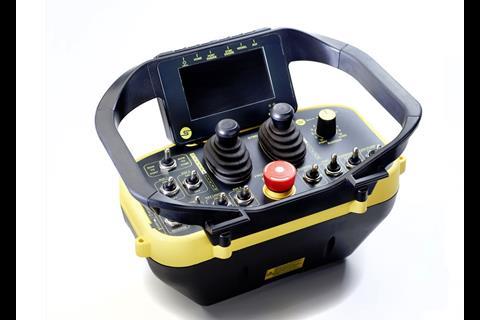
It is this solution Herman Sr. has selected with Sea Machines’ SM200 wireless remote helm system. The remote user interface typically includes two joysticks for gear and throttle control, a steering knob, 11 assignable toggle switches for auxiliaries and payload equipment, an emergency stop button and a colour LCD screen displaying vessel parameters. With a range of 1km control can be from nearby shore as well as around the vessel itself.
Erwin van Dodewaard, operations manager at Herman Sr. says: ‘No longer bound to a fixed control station, our crew will use Sea Machines’ wireless helm to monitor operations from the tugboat’s upper decks or wherever visibility is greatest, a valuable capability that increases both productivity and safety.’ adding: ‘This system is intuitive to use and once installed, will be valuable to our crews as they operate our vessel Teddy during challenging projects, such as large and overweight offshore tows.
As well as conventional towage assignments, Herman Sr. offer a range of associated services including dredging and coastal construction support where situational awareness when operating the on-board crane and winches is important for safety and efficiency where conventional methods of communication often rely on signals relayed from another crew member to the wheelhouse.
Recently the US Coast Guard and ABS approved the SM200 for installation aboard an articulated tug-barge unit and Sea Machines’ range includes an AI-powered situational awareness system for larger vessels including cruise ships with trials underway and reported as ‘available soon’.
By Peter Barker
Topics
Related Companies
- Previous
- Next