

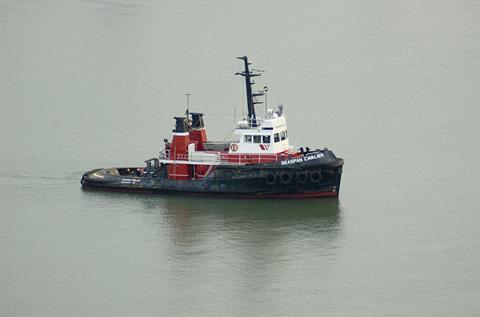
"We got 59,115 hours on those engines without even removing a head". For Seaspan International however, re-engining the 47-year-old tug Seaspan Cavalier was a worthwhile investment.
Seaspan’s port engineer Kevin Tweedy adds "and they could easily have done 60,000 hours" providing an insight into the project to give a new lease of life to the vessel in an operation common for example in Europe where re-engined and re-built tugs of 50 years vintage are not unusual in certain sectors.
Seaspan Cavalier was built in 1974 at the company’s own shipyard, one of four similar tugs towing fuel and general cargo barges on the British Columbia coast, often involving triple wood-chip barges. The vessel is no stranger to such surgery however having been re-engined twice before, hinting at the hours these workhorses put in.
Mr Tweedy explains the process: "We cut a seven by eight-foot hole in the tug’s port side and installed both starboard and port engines through that" adding that the same place is used each time with the old welds being cut in both the hull plate and framing ensuring the structural integrity of the hull. He explains further: "Putting it back together we do a sealing weld from the inside first, then clean the weld from the outside before doing a second sealing weld from the outside."
The old 850hp, Tier I, Cummins KTA38 main engines were replaced by brand new Tier II versions of the same engine clearly demonstrating faith in the original arrangement. The engines are coupled to the ‘massive and virtually indestructible’ Lutkin RLS 3614 gearboxes turning three-bladed propellers in nozzles. "The props are in good shape" says Mr Tweedy adding: "but we will send them to Osborn Propellers for tune up, crack testing and pitch tests as well as weld fill in way of cavitation and balancing."
Seaspan Cavalier is fitted with a single-drum Burrard Iron Works winch spooled with 548m of steel wire rope, tow pins and a hold-down claw also fitted and the tug was expected to maintain its 27tbp, the transition from Tier I to Tier II requiring minor popping and electrical modifications. Mr Tweedy sums up the project saying: "We don’t expect any problems and the Cummins guys are good. They take care of us."
By Peter Barker