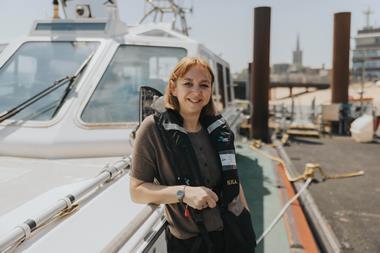


The Marine Accident Investigation Branch (MAIB) has appointed Rob Loder as its new chief inspector, replacing Andrew Moll OBE, who retired earlier this month after 21 years’ service.
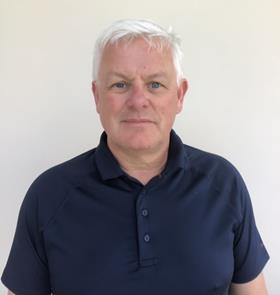
We spoke to Mr Loder about today’s challenges at sea, and what the MAIB is doing to try and keep seafarers safer.
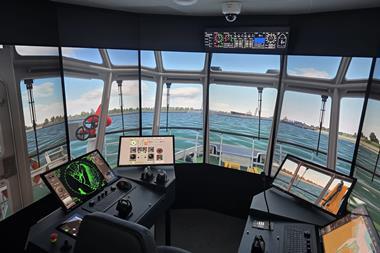
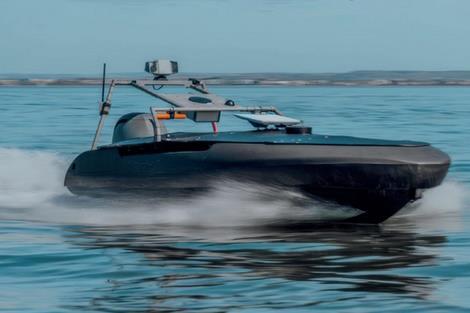
With the MAIB currently investigating a collision between a Crew Transfer Vessel (CTV) and unmanned vessel, fears about the dangers of autonomous or remotely operated vessels in increasingly crowded seas is no longer just a fear.
Loder is unable to give any more details about the incident, but it proves that while modern technology can deliver efficiencies and safety in some ways, it also has new risks and they have to be carefully understood.
“I think it will certainly help because technology can assist crews, but you have to manage the new risk, and consider the unintended consequences of autonomous shipping,” he says.
“It’s an ongoing investigation, so I can’t give you too much detail – but with the CTV being relatively large and fast and the autonomous vessel relatively slow and small, it will take significant changes to understand how a manned vessel can operate in the same sea space as an unmanned vessel.
“You have a dynamic where you have a human brain and an electronic brain, and both need to understand what each is going to do,” he says, adding that the investigation is already ‘throwing up some interesting lines of inquiries’.
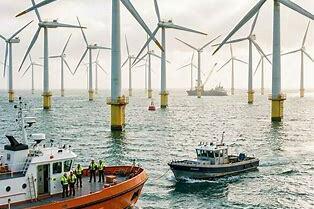
One of the challenges is the physical difficulty of detecting small autonomous craft, with some survey vessels just a few metres long, compounded by growing traffic density in offshore areas. Data from the UK Ship Register indicates that the biggest growth in shipping is in smaller workboats, attributing the increase largely to offshore renewables.
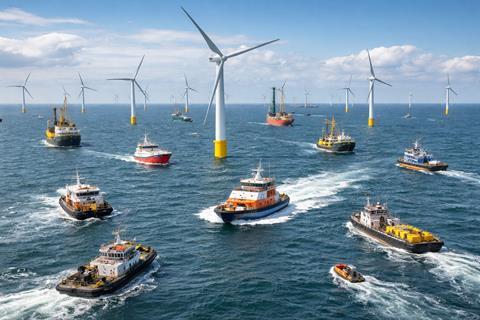
“Everyone’s competing for the same sea room, so CTVs are operating close to wind turbines, fishing vessels, transiting large merchant vessels… so the pressure is on.”
Autonomy will likely expand from this environment. “It will come from the small sector first,” he predicts, because of the demand for survey work around offshore installations.
New fuels, batteries and rapid evolution
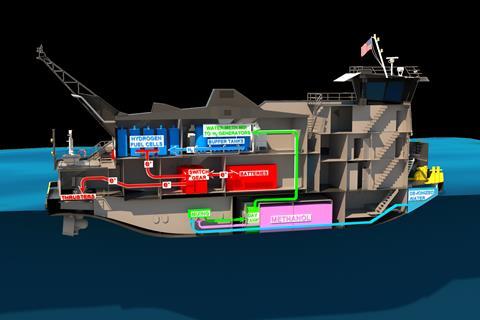
Alternative fuels and battery propulsion are another emerging safety challenge, particularly because innovation is occurring first in the workboat sector.
“Before joining MAIB, I commissioned a couple of alternative fuel vessels, battery vessels, and what was surprising was how different each was,” he says. “Certainly the early adopters were quite bespoke. They’re bringing technology perhaps from wind sectors, even automotive.
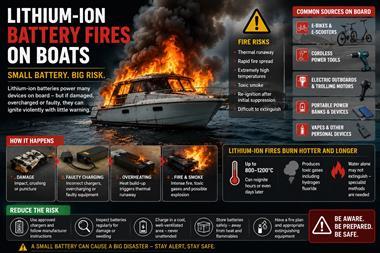
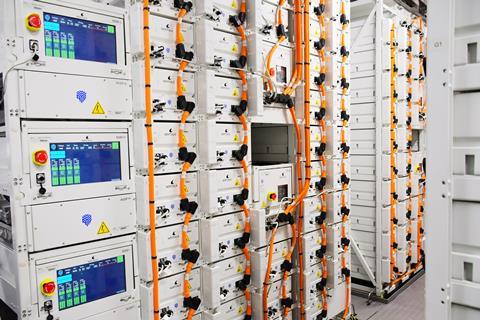
“But is the kit actually marinized? Is it marine fit? Are the safety systems built into the vessel to deal with perhaps a lithium-ion battery fire, which is quite a unique fire?
“When they get into chemical runaway, they tend to vent and the venting is very high temperature gas, so you need very good structural fire protection. You need a very specific firefighting system and crews need to know how to operate them.”
Training is therefore critical, and it’s the same with the newer fuels coming down the line.
“There’s a lot to learn to how to bunker that fuel safely, manage it on board and deal with it when things go wrong,” he says. “Large ships are driving small ships – some of the gases will come into small vessel propulsion systems. There’s a lot to learn to bunker that fuel safely. manage it on board and deal with it when things go wrong. So I think there’s inevitably going to be some challenges that we’ll see coming over the horizon.”
Guidance, maintenance and building ‘muscle memory’
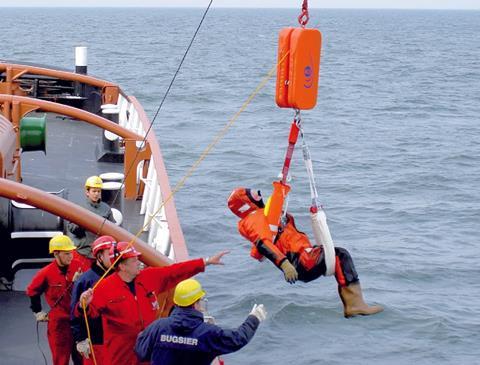
Technological advance means the age-old fundamentals are even more valid, Loder says: maintenance, training and adherence to procedures.
“With safety critical equipment it’s about making sure it’s fit for purpose, they’re tested regularly and the crews are trained how to use them, so it’s muscle memory when they need to use it,” he says.
“So for the workboat sector, for example, man overboard recovery systems are something that you don’t use in your day-to-day work. but you when need them, you need them.”
Maintenance is particularly important in the harsh workboat environment.
“The environment of a work boat, it’s aggressive: lots of elements are working on the kit, so that does increase maintenance,” he says. “It’s about recognising that there may be improvements or changes of maintenance. In the safety boat sector, they do a lot of handling work, which becomes day-to-day and you get normalised in quite high-risk activities when unsafe behaviours can creep in.
“It’s going back to basics of keeping away from suspended loads and being very religious in your adherence to procedure.”
Workboats do in fact have a pretty good safety record, he says – “but safety can drift: nothing bad happens yesterday so it won’t happen today is not necessarily so.”
This approach, he added, recognises how quickly accidents unfold. “Everything is well and all of a sudden it’s not… it’s what you do when you’re not in the accident that will possibly drive your behaviour when most needed.”
Tragedy and lessons learned
Loder brings decades of experience to his new role, training ashore first in heavy machinery before going to sea, where he has worked across the board – as chief engineer, on tankers, cable ships, ferries and superyachts, before moving into fleet management, ship repair and project management.
“I actually went away as a crew member and then converted to engineer officer and eventually sailed as a chief engineer,” he says. “It’s been an interesting time to be at sea, to go from the old way to the contemporary safety culture.
And he has witnessed firsthand the kind of catastrophe that can result from human action.
“I think the worst example that I witnessed was one of the age-old enclosed space entry, where someone was overcome and then someone also became overcome trying to rescue them,” he says.
“The risks are so well known – going into an enclosed space where the atmosphere is either deficient in oxygen or there’s something in there. We did one on a large bulker where three stevedores died just through lack of oxygen in a cargo access space.
“You never forget something like that. It’s a human factor thing, where very often someone will see someone else is in trouble and they’ll go to help them. And so they put themselves at risk.
“How do you change that behaviour, that initial reaction to try and help their fellow, their colleague?
“How can you train that out of the person to actually take a beat and go, hang on, I need to think about this, I need to get some breathing apparatus,” he says.
As chief inspector, Loder’s priorities include getting on board with new technologies and communication methods before they suddenly arrive, and disseminating that information.
“We’ve got a bit of a hill to climb getting through some older reports which we’re working on,” he says. “The world is a changing place and the way people want to receive information is changing. We’re wondering what is the best way of conveying safety messages: the trend is obviously to read off of tablets and phones, so does our reporting format fit?
“Because my sea-going experience is time dated. some of the things that the modern seafarer, your readership, are dealing with did not exist when I was at sea, and I’m aware of that. I have to send inspectors out and be prepared. Obviously, they can’t know everything about everything that’s coming down the line, but they have to know what they’re looking at to ask the right questions.
“We’re looking at the training, the staffing, how we conduct accident investigation, and really what’s the best way of getting the message out there? Because if our messages don’t land, the safety improvements are not going to be delivered.”