


Spanish shipbuilder Astilleros Gondan has won an international tender to build two advanced hydrographic research vessels for the German government.
The tender process lasted three years, the company says, but ultimately the award was made by the Bundesamt für Seeschifffahrt und Hydrographie (BSH), the federal agency responsible for maritime safety and nautical hydrography in Germany.
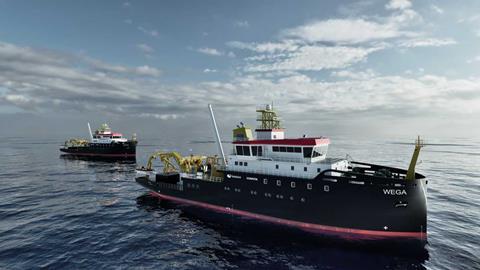
The two new vessels, Wega and Deneb, are part of the government’s plan to modernise its research fleet and ‘ensure continuous operations in the North Sea and Baltic Sea’.
The vessels, which have been designed by Spanish naval architect Seaplace, will be 70 metres in length and 15 metres in beam and will be able to use methanol as a fuel.
They will also comply with DNV’s ‘Silent-R’ standard, a low-noise operation that protects marine life and allows for accurate acoustic measurements. It will also feature dynamic positioning and hydrographic equipment, with its own underwater and autonomous vehicles.
Gondan has been busy: last week it delivered the Pole Star vessel for the Northern Lighthouse Board, the authority responsible for the management and upkeep of Scotland’s buoys and lighthouses.
Designed by the Danish naval architects OSK Design with Seaplace, the 70m vessel can accommodate 26 crew and is propelled by three 1860kW hybrid-electric engines. As well as its buoy and lighthouse tasks, Pole Star can carry out hydrographic surveys.
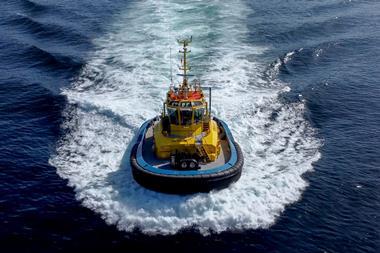
In November, Gondan signed a contract with Norwegian shipowner Østensjø Rederi to build what will be the most powerful tug boat in the fleet, with a bollard pull of 150 tons.