


Swiss battery maker Leclanché says its marine batteries are difficult to compete with, whether in performance, sourcing or recycling. In the third of our series of interviews with battery makers, we talk to Guillaume Clément, vice president for Marine Mobility.
As batteries move from the engine room to centre stage in today’s developing electric marine sector, Switzerland-based battery manufacturer Leclanché claims to be one of the pioneers powering this transformation.

Guillaume Clément, vice president for Marine Mobility at Leclanché, says the company’s offering is special in many ways: not least because every gram of material used within its products have a traceable origin. In a world where cobalt, a critical element in NMC batteries, is mined by children in the Congo and vast swathes of South America have been destroyed by lithium mining, this is an important claim to make.
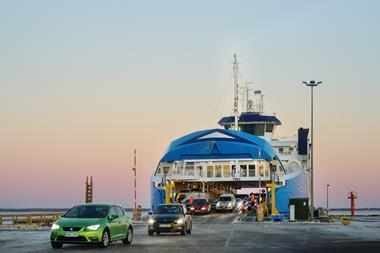
Leclanché’s journey into the marine world began nearly a decade ago, catalysed by EU funding for the fully electric ferry Ellen.
“That project gave us legitimacy,” says Clément. “We weren’t just a battery supplier – we were one of the first in the world with a working marine-certified battery system.”
Today, Leclanché is involved in battery integration across a wide range of vessel types, from ferries to offshore wind installation ships.
Built for the sea
Marine batteries must withstand extreme and unique challenges. Ships require long-life batteries capable of withstanding constant deep cycling and harsh vibrations, and they need strict safety certifications.
“In industrial applications like ships, batteries are used intensively – charged and discharged daily,” Clément says. “They need to have a long life cycle.”
They also have to withstand endure marine-specific conditions like continuous vibration and extreme thermal stress. One of the most feared risks in marine energy systems is thermal runaway. when batteries overheat, potentially leading to fire.
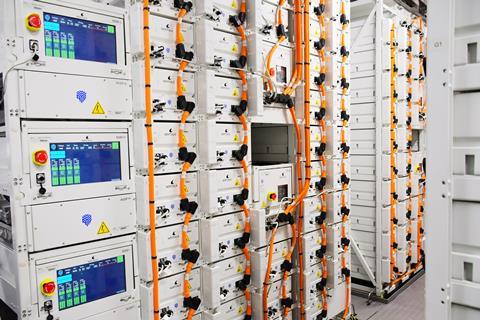
Leclanché has engineered its battery modules to mitigate such events, Clément says. Their proprietary safety design includes an IP-rated protective box for each module, equipped with sprinklers that automatically inject water when high temperatures are detected. A carefully sequenced water-cooling protocol then continues for nearly an hour to suppress the risk of re-ignition.
“We don’t just prevent thermal events – we stop them before they become fires,” says Clément. “When we test in labs, neighbouring modules show zero damage – not even a scratch.”
Real battery making
Unlike many of its competitors, Clément says, Leclanché actually manufactures its own cells rather than simply assembling imported components.
“Most of our competitors aren’t true battery makers. They buy cells, usually from Asia, and package them in Europe or North America,” he says. “Our batteries are made in Europe, designed for marine use from the ground up. That gives us performance and safety advantages.”
Their approach extends to sourcing too. Clément is candid about the contentious history of cobalt in battery production but insists the company has addressed these concerns head-on. “We source cobalt from Umicore in Europe. It’s certified, traceable, and 100% free of child labour,” he says. “Ironically, cobalt is now one of the safest materials to source because of all the scrutiny it’s been under for decades.”
In fact, Leclanché is already phasing cobalt out of its new chemistries. Its next-generation NMC-A (nickel-manganese-cobalt-aluminium) chemistry, backed by the EU’s Current Direct project, boosts energy density by 15% and slashes cobalt content further.
Application expansion
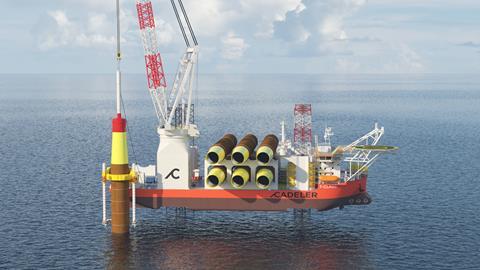
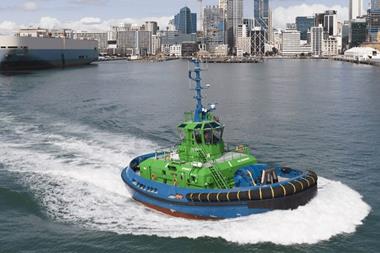
Initially dominant in the ferry market, where routes and charging patterns are predictable, Leclanché’s marine batteries are now seeing growing demand in more complex vessel types. “We used to say ferries were 100% of our market. Today, it’s everything: offshore support vessels, seismic ships, wind farm installation vessels,” says Clément.
On these hybrid vessels, batteries don’t typically power propulsion, but support high-demand operations like crane deployment or jack-up operations. They also serve to optimise generator efficiency by storing excess energy and supplying it during peak loads, as spinning reserve. This hybrid functionality can deliver fuel savings of 7% to 15%.
“It’s not enough on its own to justify battery investment,” Clément admits, “but if you already have batteries onboard, why not use them for multiple functions?”
Charging directly from offshore wind farms is on the horizon, especially for Crew Transfer Vessels.
“It depends on the operator’s point of view. If you’re operating the wind farm, recharging at sea saves you port fees,” he says.
Scaling up and recycling
The future is bright – and busy.
“Our biggest challenge isn’t demand,” says Clément. “It’s capacity. We’re investing to expand production in Germany by tenfold.”
Recycling is another critical piece. While most marine batteries haven’t yet reached end-of-life, automotive batteries have, and whatever you hear from potential battery recyclers, it is not being done on a meaningful scale yet. It simply isn’t cost effective: it is usually cheaper to mine new materials than extract it from used batteries.
Leclanché already includes recycled content in its cells at least, and advises customers on best-practice recycling options.
“We’re selective about who we work with, because not all recycling methods are equal,” he says.
One point that Clément raises is about the use of PFAS (Per- and Polyfluoroalkyl Substances), or ‘forever chemicals’, which have been around since the 1940s because they contain strong carbon bonds that make them extremely resistant to heat, water and oil. They are almost nearly impossible to break down in the environment or indeed the human body.
Leclanché’s batteries avoid using them.
“We want our batteries to be worth something at the end of their life,” he says. “The rare materials we use – like cobalt – give them real recycling value.”
The battery horizon
As new EU regulations on maritime emissions come into force, Clément believes batteries are no longer “nice to have” – they’re a necessity.
“Every ship is now asking whether to have batteries and if not now, at least to be ready to retrofit later,” he says. “And the battery systems themselves keep getting bigger.”
Leclanché’s goal is to stay ahead of that wave. With solid-state and sodium-ion technologies still 10 years away from commercial readiness, Clément believes high-performance lithium batteries like theirs remain essential.
“We’re enabling the energy transition – not just with what we make, but how we make it,” he says.