

The practicality of matching the right propulsion system to the right vessel was discussed at one of the many Seawork conferences this year, with electrification a prominent theme despite its fairly lacklustre uptake in recent years, according to several operators who spoke to Maritime Journal at this year’s event.
Speaking at the Propulsion in Practice: Matching systems to operations session were RAD Propulsion’s Dan Hook, Volvo Penta’s James McPaul and Ecomar’s Eugene Bari, with Noel Tomlinson, from BMT, moderating.
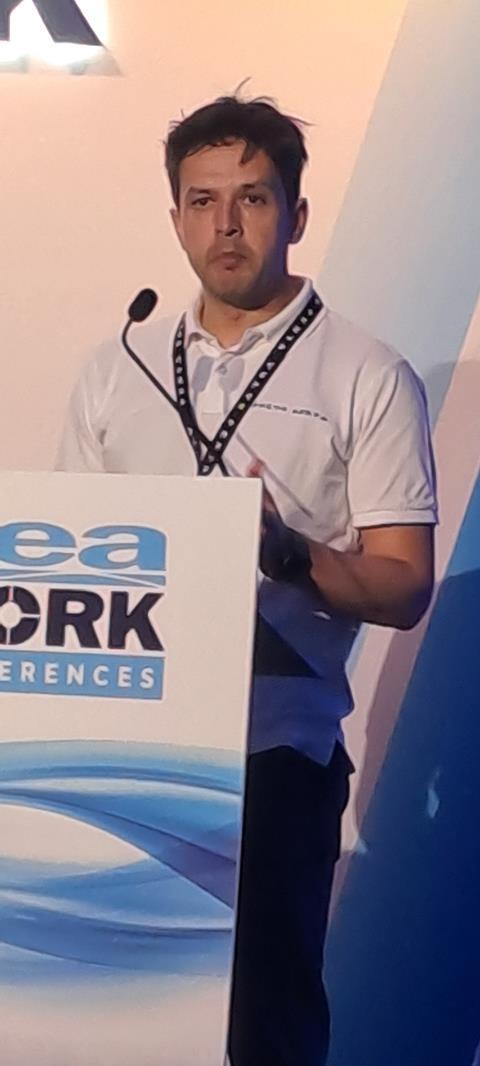
“Propulsion is obviously at the front and centre or performance reliability and operating costs,” said Dan Hook, who has spend most of his career working with unmanned systems. “If you get it right, it adds value. If you get it wrong and put the first technology into a space that isn’t ready for it, it doesn’t work.”
A recurring theme throughout the discussion was the tension between technological progress and industry caution.
“The industry has to accept something different from what they are used to,” he said. “It needs risk takers, and we have already seen battery and motor Capex costs coming down.”
Hook’s comments reflected wider concerns over the financial viability of low-emission propulsion systems, particularly for smaller operators balancing environmental pressures with commercial realities.
For Eugene Bari, founder of Ecomar, uncertainty around regulation had slowed investment decisions. The International Maritime Organization’s decision last year to put proposed emissions penalties on hold, he said, had stopped a lot of people making decisions.
He also said that established engine manufacturers were resisting any rapid disruption from newer technologies.
“There’s a lack of bravery from some elements and also if you have got a $1 billion market making those machines you are going to try and kill us,” he said. “We are not trying to destroy anyone but it doesn’t work the other way round. If you’ve got a $20 million ship, why would you risk that with a smaller SME?”
But change has to come, he said.
“We still explain the power of an engine with horsepower, but how many people are still making saddles?” he said.
Volvo Penta’s James McPaul highlighted both the opportunities and barriers associated with hybrid and electric propulsion in the offshore wind sector. Volvo Penta’s IPS propulsion system currently accounts for more than 60% of crew transfer vessels (CTVs), according to McPaul, with the company now seeking to expand into hybrid and full-electric systems.
“Diesel engines are still our core business. The D16 is the largest engine with a bit more torque and we are now launching hybrid operations and a parallel hybrid electric motor. Everything depends on the application and the requirements. Our IPS delivers 30% reduction in fuel and they can all use HVO.”
However there were two major stumbling blocks to wide-scale adoption of electric propulsion systems, he said. Funding was the first.
“They are three times more expensive by the time you factor in the drives, electrification, microgrid, etc,” he said.
The second challenge was complexity.
“A 25-30m vessel is complex to run and it costs a lot of money. It’s difficult to justify that when you can have an older, efficient conventional engine that will do the same thing.”
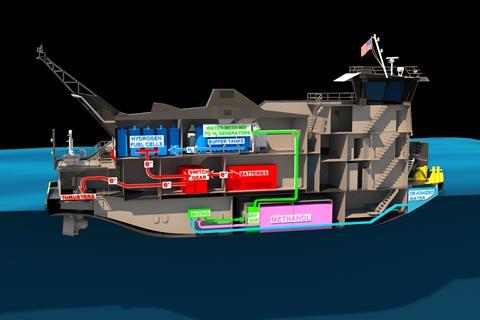
The debate also turned to future fuels, particularly methanol and hydrogen, which Ecomar is working on.
Bari said liquid hydrogen was coming to mainland Europe and the transition would be in less than five years, while McPaul questioned hydrogen’s suitability because of energy density and storage limitations, suggesting methanol may offer a more practical alternative.
Bari disagreed, arguing that hydrogen, ammonia, methanol ’are all horses for courses with different characteristics, all have different advantages’, adding that methanol would be more suited to vessels above 30m.
“The expectations are wrong,” he said. ”The energy wasted on most vessels is extraordinary. We are losing energy on burning, miscollaboration of the power bank, etc. Electric engines are extremely reliable. New battery technologies are coming up all the time – there’s a new solid state coming.
“We’ve made lots of cock-ups but it’s part of the learning process and they lead us to a better end result.”
The panel also addressed retrofit challenges, noting that adapting older vessels to new propulsion systems could present structural difficulties.