


Without more leases, infrastructure or investor confidence, the UK’s floating wind ambitions look highly unlikely, says Theo Cleave, commercial manager at marine construction specialist MintMech.
The UK has committed itself to a 100% carbon-free electricity system by 2035 and net zero by 2050. The majority of the country’s green electricity is expected to come from wind power by 2030. With some of the world’s best offshore wind resources, most of that will come from offshore installations and the target is 43-50GW of offshore wind by 2030, with 5GW coming from floating offshore wind.

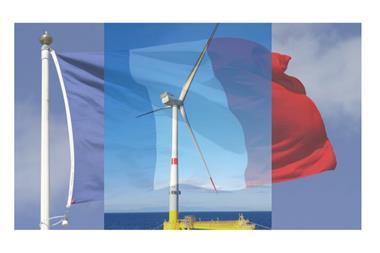
Fixed-bottom offshore wind farms continue to provide a significant share of renewable electricity. But, according to the Energy Technology Institute (ETI), the UK has many high-energy offshore wind sites beyond the depth where current fixed-bottom technology is viable, and this is where offshore floating wind comes in.
According to Stuart Bradley, strategy manager - offshore renewables at the ETI, In water depths under 30m fixed foundations are the prime solution, but in at 50 metres and more, floating foundations are the lowest cost solution.
A paper from the University of Oxford Smith School of Enterprise and the Environment suggests that ultimately, floating wind could provide the UK with more than 2,000TWh a year, which is more than the entire country’s predicted 1500TWh annual electricity consumption for 2050.
There are additional benefits to floating wind that give it real potential. It is cheaper and quicker to install, uses less steel therefore contains less embodied carbon, and is simpler and cheaper to decommission at the end of a contract.
Everyone appears to agree that floating wind is going ahead, and the Celtic Sea looks ideal — but as it stands, there’s no real forward momentum. In April 2025, bidders were still waiting for leases for three sites in the Celtic Sea. With less than five years to go before the 2030 deadline, only a handful of pilot floating wind schemes exist.
No chain, no gain
Without a committed pipeline of projects, investors are bound to be sceptical about investing in the necessary infrastructure and supply chains to make floating wind happen. For example, there would be a huge demand for quayside space, anchor chains and fabrication dockyards – but it’s a gamble to build them on the chance that floating wind overtakes fixed-bottom as the UK’s principal source of offshore wind energy.
According to a 2024 report by the Government-Industry Floating Offshore Wind Taskforce, floating wind could employ 97,000 people and contribute £47 billion to the economy by 2050. But if you asked me today to give you 50 floating wind turbines, I’d be more likely to turn to places like the Netherlands or Germany, which are miles ahead in terms of infrastructure and supply chains.
Manufacturing, assembling and installing floating wind turbines is one thing, but they still need plugging in. We’d need to construct substations, install cables and develop onshore infrastructure to receive the generated power, which would often involve work like directional drilling in highly tidal areas like the Celtic Sea. This could be in South Wales or in the Southwest, and wherever the power goes ashore will see a big industrial benefit, but virtually none of this infrastructure exists yet.
Developer engagement and government
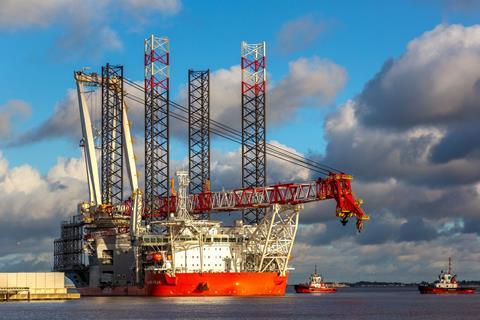
Perhaps the clearest contrast between floating and fixed-bottom offshore wind is the behaviour of the developers. I remember an RWE-led event related to expanding a fixed-bottom installation in North Wales where about 50 staff were stationed at topic-specific tables. Attendees could choose to speak on topics like semisubs, O&M, anchoring solutions – whatever their area of expertise. They were encouraged to explain their role in the supply chain and essentially pitch their services. It was direct engagement with the people who were delivering the wind farm, the ones signing the cheques.
With floating wind however, engagement like this appears absent. Without contracts or even lease awards, what are suppliers supposed to do? Few look willing to build new facilities or hire staff in the hope of future demand.
If the private sector won’t make the first move, floating wind feels like the perfect proving ground for the newly formed company Great British Energy (GBE). By breaking the stalemate with leases, guarantees or seed capital for UK-based fabrication, a public entity like GBE could make a real difference. This is the kind of high-risk, high-impact move that gives GBE an opportunity to make a name for itself. Besides, who actually made the 5GW offshore wind commitment?
Pledges and strategy documents are one thing, but until there’s a major player saying, “we want an established floating wind design by this date, come to our conference, talk to our teams, we’re taking ten concepts forward”, I can’t see the industry acting.
The UK has some of the best offshore wind resources on the planet and the country is already a global leader in fixed-bottom resources. Perhaps the same can be true for floating offshore wind. The expertise exists, the geography is ideal, and the ambition has been stated. Now the question is whether anyone is ready to anchor that ambition to action.
Theo Cleave is commercial manager at marine construction and subsea engineering specialist www.MintMech.com, which specialises in the design, manufacture and operation of geotechnical drilling, large diameter drilling, marine construction and offshore handling equipment.