


From scuttling fishing vessels to rescuing stranded jumbo jets, salvage professionals prove they’re the sea’s emergency services – innovative, high-risk operators whose work extends way beyond ship fires.
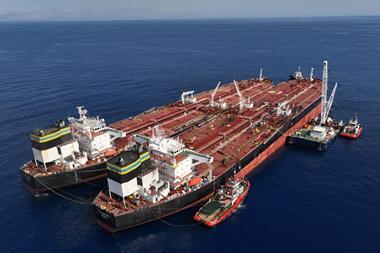
The deliberate sinking of a fishing vessel and the recovery of a stranded jumbo jet are among activities undertaken recently by professional salvage contractors, and a look at the International Salvage Union’s (ISU) latest round-up of member activity is a glimpse of the financial and human risks faced by these emergency services of the sea.
Running out of runway
Aircraft running out of runway during take-off or landing phases is not uncommon – and if the airport is close to the sea, maritime expertise is often required for recovery of the stranded aircraft.
Around 20-30 airports are built on reclaimed land or artificial islands around the world, with hundreds of others having at least one approach or departure path over water.
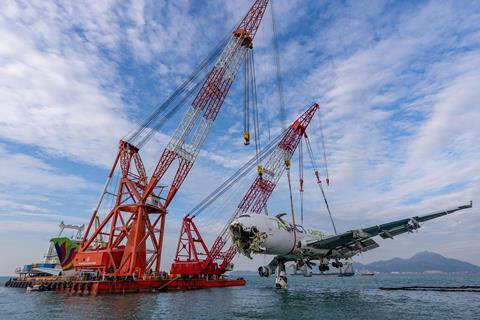
Hong Kong International Airport is in the former group and recently experienced a Boeing 747 cargo aircraft veering off the runway and coming to rest on the breakwater beside the runway. Two airport workers lost their lives in the incident.
Guangzhou Salvage, a unit of ISU member China Rescue and Salvage, was involved in the complex operation to recover the aircraft.
With the airport closed there was widespread concern around disruption for what is listed among the top 10 busiest airports worldwide (by passenger volume). Interested parties, including the airport itself, accident investigators and Hong Kong’s marine department each had their own priorities and following surveys a deadline of seven days was given for completion of the aircraft’s removal.
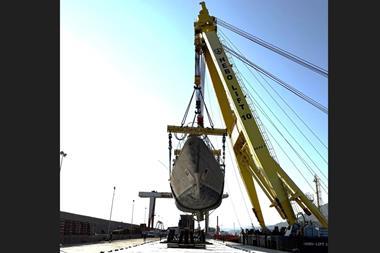
Guangzhou Salvage assembled a team of engineers and divers along with heavy-lifting assets, including the crane vessels Nan Tian Xiang and Nan Tian Peng, which provided a combined lifting capacity of over 800 tonnes.
“This was no ordinary salvage operation – it was high-precision work carried out under intense global scrutiny, there was no room for error,” said Dai Changgen, a salvage adviser who oversaw activities including vessel positioning and lifting operations.
Aircraft engineers instructed salvors about the fragile nature of the wreckage structure and imbalanced weight distribution.
Divers faced particular challenges. Working largely by touch and contending with mangled and jagged metal along with the wings swaying in the current, they located secure lifting points while separately the aircraft’s black box was recovered.
Using dynamic adjustment of the centre of gravity, after five days of intense effort the two lifting vessels successfully raised the aircraft and placed it on a barge to be removed for investigation.
“The efficient operation earned high praise from all sectors of Hong Kong society and the Airport Authority, and the Civil Aviation Accident Investigation Agency sent official letters of appreciation,” said Guangzhou Salvage, with continuous media coverage embedding the image of the rescue team as “ready when called, capable upon arrival, and victorious in action.”
Hong Kong has previous experience of such incidents, including in 1993 at the old Kai Tak Airport, which closed in 1998, when a Boeing 747 passenger aircraft went off the end of the runway and ended up in the harbour. Everyone on board survived that accident.
Traditional services
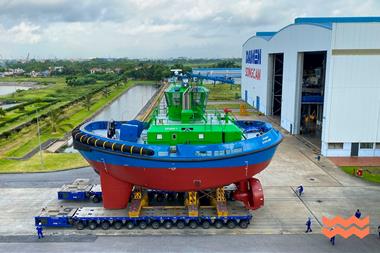
In September 2025, Vlissingen-based Seacontractors reached a milestone in its growth strategy with the sale of 15 tug/workboats (up to 50 ton bollard pull) to Jifmar Group and the acquisition of larger, more powerful vessels to ‘sharpen its focus’ on anchor-handling tug supply vessels in the 70-200tbp bollard pull range.
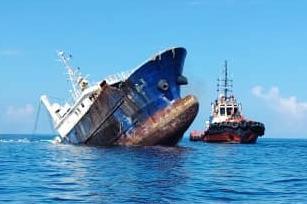
One of these tugs, the 120tbp Sea Seraya, came to the aid of a vessel suffering engine failure east of Sicily in the Mediterranean. In a ‘precise and professionally executed intervention’, the vessel was towed to Augusta anchorage.
“These situations demand quick response, careful planning, and experienced hands and Sea Seraya once again proved her capability in ensuring the safe recovery of vessels in difficulty,” said Seacontractors.
Spanish salvor Ardentia employed hot-tapping techniques to remove oil after a tug sank in the entrance to Port of Barcelona. Salvage operations had to be completed without closing the port at any time and airbags were used to refloat the vessel, which was towed to a dock and parbuckled by crane.
Ardentia also provided oil spill control services and emergency response to two oil and gas decommissioning projects in Spain, demonstrating how salvors’ wide expertise gained ‘in anger’ can be used in a just-in-case prevention role.
Resolve Marine has been kept busy with salvage activities of a traditional nature, including providing maritime expertise for local shore-based fire-fighters following an engine room fire on a container ship docked at Port of Wilmington, Delaware.
When another container ship experienced cargo shifting in heavy seas in Uruguay, Resolve deployed specialist rope access technicians to assist in dealing with 101 damage containers including those carrying dangerous goods.
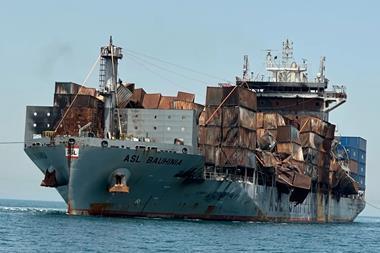
Widespread publicity accompanied the Solong/Stena Immaculate allision off the UK east coast in 2025, following which Resolve was engaged for work including removal of damaged and undamaged containers once the former vessel had been towed to Aberdeen.
The three-week operation saw 1,050 tonnes of fire-fighting water and 240 tonnes of hydrocarbons removed from Solong, then the vessel was towed away for recycling. With one of Solong’s crew missing presumed dead, its master is currently on trial at the Old Bailey charged with gross negligence manslaughter.
Occasionally salvors have to assist with the sinking rather than saving of vessels, and ISU member Pacific Towing (PacTow) provided a dive team for the controlled scuttling of a fishing vessel 15 miles off Port Moresby, Papua New Guinea, in 600m of water.
“The disposal ensured the vessel would not re-enter service, eliminating the risk of further illegal fishing activities and supporting regional maritime compliance and security,” said PacTow.