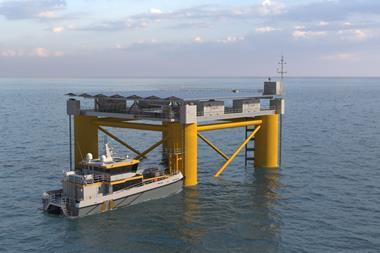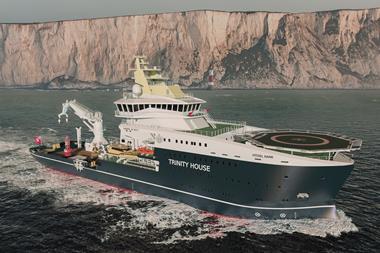



Norway-based shipbuilder Vard will design and build a US-based research vessel that it says will be one of the most modern research vessels ‘the world has seen’.
Especially designed for scientific exploration, the vessel – which has been named RV6000 while in build – will join Inkfish, which calls itself ‘a global philanthropic organisation that integrates vessels, engineering, medical innovation and operational expertise to develop new technologies and further marine research activities’.
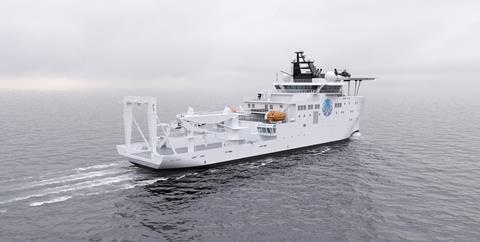
RV6000 will be 100 metres long, with a maximum speed of 15 knots that it will achieve with hybrid propulsion and eVSPs (electric Voith Schneider Propellers). It has a remotely operated vessel (ROV) that can dive to 6,000 metres and can support two manned submersibles.
“The vessel is fitted with a hydroacoustic survey system capable of high-resolution seafloor mapping at 0.5 x 1 degrees resolution and water column analysis across all depths,” says Vard. “The hull is developed for advanced seafloor mapping performance as well as superior sea-keeping abilities, using advanced anti-roll technologies for reduced motions and accelerations and excellent station keeping performances whilst in Dynamic Positioning Mode.
“The vessel features a fully integrated SeaQ Bridge, operated through 12” touch screens with a highly intuitive matrix, providing both a comprehensive overview and complete control of bridge navigation and critical onboard systems via big-screen displays.”
It will also have the most modern laboratories, offices and workshops and stringent comfort features for accommodating up to 70 scientists and crew.
Inkfish, which was formerly called Arctic Rays, specialises in subsea imaging technologies to support marine researchers around the world. The new vessel will join its fleet, which consists of two other research vessels, the RV Hydra and RV Dagon.