


One of the complaints about the burgeoning offshore wind sector is the dangers it poses to marine life: but using robotics and other modern methods, environmental scientists say they can reduce the risks. Daniel Smith, Offshore Wind Biodiversity Solution Owner, Fugro, tells Maritime Journal how.
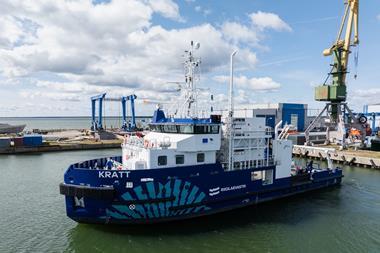
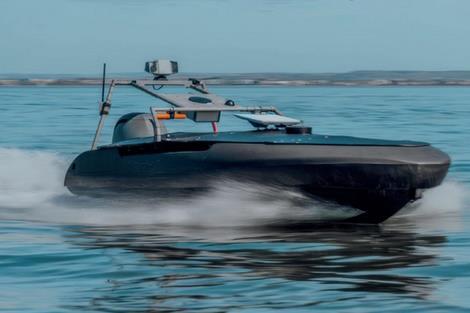
A small red uncrewed vessel motored out from the Dutch port of Den Helder and made its way toward the CrossWind offshore wind site, without a single person on board.
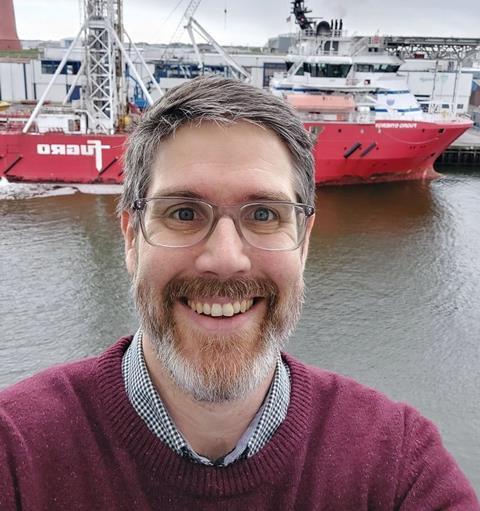
The crew, remotely operated vehicle (ROV) pilots, and environmental scientists were all in Aberdeen, monitoring operations remotely. Teams from Fugro and partner organisations were united by a common objective of improving understanding of how marine ecosystems are responding to offshore wind development.
The mission formed part of BeWild, a multi-partner biodiversity research programme (supported by the Dutch Enterprise Agency) that is reshaping approaches to offshore environmental monitoring. While advanced autonomous vessels and sensing systems enabled the work, the collaboration behind them was equally key.
Across the offshore wind sector, organisations are recognising that large-scale biodiversity challenges cannot be solved through innovation in isolation. Rather, progress relies on shared research, integrated monitoring systems, and open-innovation partnerships.
Ecosystem complexity demands integrated monitoring systems
The complexity and diversity of marine ecosystems are exactly what make them so valuable, but also so challenging to study.
Defining a technical problem such as a structural anomaly is straightforward. Capturing the full complexity of ecosystems is a whole different challenge.
Fugro focuses on translating scientific understanding into practical, scalable solutions. Our strength lies in taking proven science and applying it in real-world environments, bridging the gap between research and implementation to deliver meaningful impact in the field.
This frequently means integrating multiple technologies such as USVs, electric ROV-based sampling systems for eDNA, and HD video.
Listening to the ocean: Bioacoustics in action
Bioacoustics has become a fundamental tool for understanding marine mammal presence and behaviour.
Marine mammals all vocalise differently, but distinguishing those sounds, especially across species, is challenging. Detecting their vocalisations in acoustic recordings and then classifying these sounds to a specific species is particularly so.
Working with the Scottish Association for Marine Science, Fugro integrated a range of Deep Learning analytics in the cloud.
This dramatically speeds up data analysis to produce an overview of how marine mammals use an area.
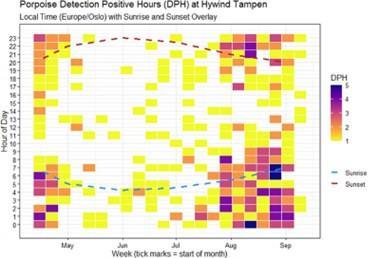
For example, the image shows harbour porpoise acoustic activity across months at particular times of day, highlighting peak vocal activity periods. Insights suggest there is a reduced risk of harm if operations are timed during lower-activity windows.
Unlocking biodiversity through genetics
Environmental DNA (eDNA) is increasingly valued for detecting species that cannot be easily observed visually or acoustically.
However, many eDNA tools were not designed for offshore conditions.
To address this, as part of the BeWild project, Fugro and the Molecular Marine Ecology team at Wageningen University co-developed a rugged eDNA sampler built specifically for deployment from USVs, ROVs or crewed vessels.
BeWild is also enabling Wageningen University to contribute to the North Sea’s genetic reference database, particularly for species of concern to offshore wind developers operating in the area.
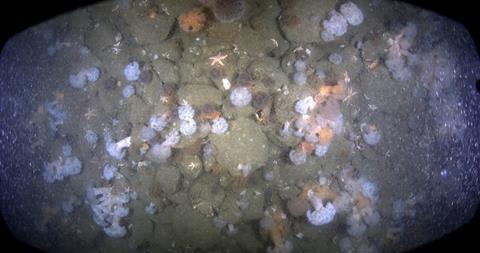
Seabed habitats are a crucial part of biodiversity assessment, particularly around turbine foundations and scour protection.
To enhance analysis of benthic imagery, Fugro has adopted BIIGLE, an open-source annotation platform widely used in marine science.
As Fugro’s normal project data is confidential to the client, Fugro developed a custom machine-learning model and collaborated with the BIIGLE development team to create new interface features.
These improvements are now available to the wider research community and support more efficient, standardised analysis of seabed imagery.
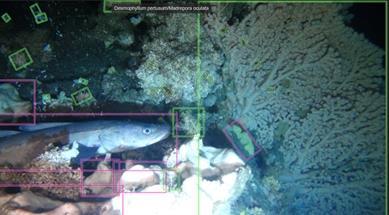
Screenshot of BIIGLE with the machine learning annotations
Collaboration as an industry standard
Open innovation is increasingly being recognised as a strategic asset, not a vulnerability.
When research outputs such as monitoring algorithms or platform improvements are made openly available, the wider industry benefits. And as environmental pressures increase, this collaborative approach is becoming essential.
By combining advanced monitoring vessels, autonomous technologies and cross-sector cooperation, the offshore wind industry is building a stronger foundation for biodiversity protection.
These systems not only advance scientific understanding but support a more responsible and resilient offshore energy future.