

Risks to birds and chronic chemical emissions from offshore wind will come under the spotlight in four new projects given the green light by a French research institute.
France Energies Marines, a public and private organisation that carries our research into marine energies, has laid out four ’research and innovation’ projects it will fund to look at various areas of offshore wind.
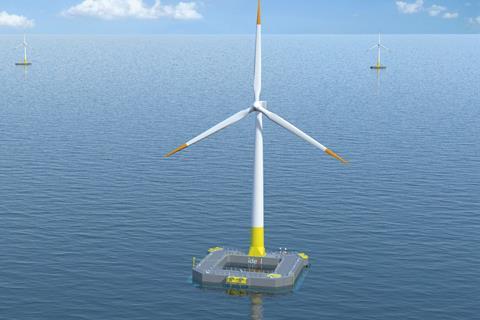
The projects will share €8 million on top of a €53 million budget it already has for research into floating wind farms, which it says could provide a massive boost to offshore wind generation given that 80% of the offshore wind energy in Europe is at depths ’conducive to floating’.
“Developing this technology would make it possible to better exploit offshore wind farms,” it says. “The first pilot farms show an average load factor of 50%-60% when fixed wind is at 40-45% and onshore at 22%. The distance from the coast offers a more constant wind and a higher average speed, but represents a strong constraint for the export of the electricity produced.
”Floating wind turbines make it possible to envisage the deployment of offshore systems in areas inaccessible to fixed-base wind turbines due to a water level of more than 60m.”
The four new projects will ’deliver methodologies and tools for industry stakeholders to improve the environmental sustainability, societal integration, reliability and profitability of offshore wind farms,” it says.
They are as follows:
• 2C MORE: To enable a more refined assessment of the impact of climate change on offshore wind energy production and turbine sizing by reducing uncertainties in climate projection models.
• AVOCET: To improve the accuracy of models used to estimate the collision risk of terrestrial migratory birds with offshore wind turbines by providing more precise data on bird flows and flight altitudes in offshore wind farm areas.
• MUTANC: To analyse the potential of shared anchors and mooring lines in terms of reliability and cost-effectiveness for floating wind farms.
• PEARL: To refine the assessment of environmental risks linked to chronic emissions of chemical elements from offshore wind turbines in sediments and certain marine organisms. It will also conduct an initial experimental study on the ageing of synthetic mooring lines and analyse associated discharges to support technological advancements with improved understanding of environmental interactions.
France Energies Marines says a fifth project is also being developed to focus on the performance of the next generation of XXL wind turbines that will be more than 300 metres tall.
”Existing design standards and modelling approaches for offshore wind turbines may need to be reconsidered,” it says.
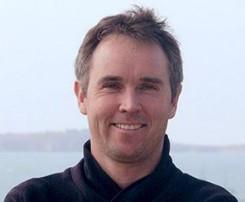
Jean-François Filipot, Scientific Director of France Energies Marines, says the projects will help to accelerate the deployment of offshore wind ‘through significant technological and environmental advances’.
“These efforts aim to deliver more efficient, competitive, and environmentally integrated fixed and floating offshore wind farms,” he says. “They respond to the growing need for low-carbon energy production and energy sovereignty.”