

One of the world’s first commercial-scale floating offshore wind farms has been approved, Vattenfall reveals in its report on the first half of 2025.
It also said it was committed to investing long term in Swedish hydropower, which CEO Anna Borg called ‘one of the most flexible energy sources’.

And the company is not stopping with wind and water – plans to have a first nuclear reactor in operation by the mid-2030s were confirmed.
The financial picture is mixed – revenues dipped year on year – and Borg also said the pace of electrification was slower than expected; but she reiterated a commitment to new energies, sticking to climate goals to create predictability as the world moved ‘from the fossil era to the future’.
Floating offshore wind
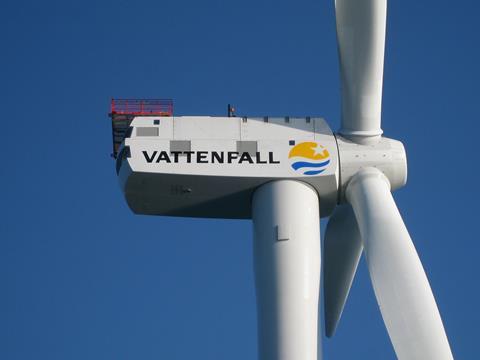
A major highlight from the report is the Muir Mhòr floating offshore wind farm, a joint venture between Vattenfall and Fred. Olsen Seawind, which has received onshore infrastructure approval.
Located off the east coast of Scotland, Muir Mhòr is one of the world’s first commercial-scale floating offshore wind projects, with a planned capacity of 1GW that could power up to 1.2 million homes. While still subject to a final investment decision, the permitting covers critical infrastructure, including underground cabling and a new substation, which is a strong indication that the project is moving toward execution.
The news cements the floating wind sector’s momentum and creates opportunities across the marine industry value chain, including foundation designers, heavy lift vessel operators and cable installation firms.
Nuclear and batteries
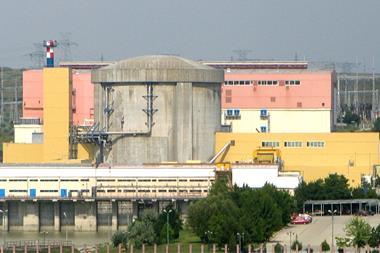
In a move that will interest marine construction and logistics firms, Vattenfall is progressing plans for new nuclear development at its Ringhals site on the Värö Peninsula on Sweden’s western coast.
Ringhals would involve extensive marine and coastal infrastructure works, from cooling systems to security installations and heavy transport requirements by sea, and could see its first reactor operational in the mid-2030s.
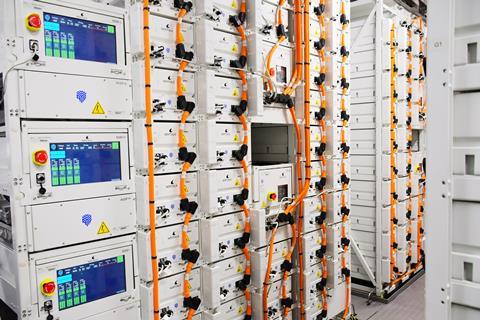
Vattenfall also reported two new partnerships aimed at optimising battery storage: a 50MW capacity project in the Netherlands with Return, which Vattenfall would manage, and a 55MW leasing agreement with Germany’s Terralayr at the end of this year.
Battery storage is helpful in balancing intermittent renewable energy, especially from offshore wind farms, and could eventually influence offshore platform energy self-sufficiency, remote marine operations and electric vessel charging networks at sea or in port.
Hydropower
Another pivotal decision by Vattenfall is its SEK1.3 billion (€116 million) investment in the country’s largest hydropower plant, Harsprånget, in the Lule River.
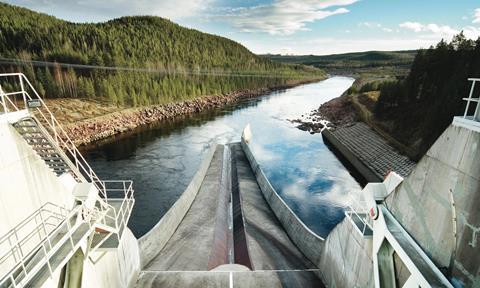
Though inland, such projects affect river navigation, cargo barge routing, and local infrastructure — with the potential to create indirect benefits for companies servicing Sweden’s inland and coastal waterway logistics.
Sweden is a significant producer of hydropower, which makes up 43% of its electricity mix. It is an ideal energy source in a country with so many rivers and lakes that flow from the mountainous north to the lower-elevation south.
Snow and glacial melt is a reliable seasonal water flow in the spring and summer.
Back to wind
Electricity generated by wind over the six months actually fell by 1.1TWh because of lower wind speeds, however this was cancelled out by the increase in nuclear power generation by the same amount. Vattenfall’s Norfolk site generated 7% less electricity.
Capital gains were realised by the sale of 49% of two offshore wind farms, Nordlicht I & II, for €455 million) to BASF to power its chemical plants. The sites were later re-purchased, with BASF securing a Power Purchase Agreement.
Vattenfall confirmed that its Kattegat Syd offshore wind farm off the Swedish coast has secured all major permits. It is awaiting a final investment decision but is forecast to generate 5TWh of electricity a year, adding to the growing project pipeline in the Baltic and North Seas.
In summary, the report is upbeat for offshore wind compared with last year’s uncertainties, which were prompted by the sale of its Norfolk Offshore Wind Zone off the east coast of England then followed by the Swedish giant bidding for the Alpha and Beta offshore sites in the Netherlands.