


Fourteen European coastal states and Iceland have issued a warning to the international maritime industry over growing risks to maritime safety from interference in satellite navigation systems and vessel data manipulation.
Greater efficiency brought about by such systems has been accompanied by greater risk, the letter says, partly because of an increased dependency on them.

In a letter addressed to ‘Members of the International Maritime Community’, the governments of Belgium, Denmark, Estonia, Finland, France, Germany, Latvia, Lithuania, the Netherlands, Norway, Poland, Sweden and the UK say modern shipping has become dangerously dependent on satellite-based navigation.
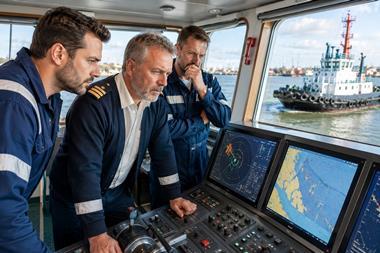
“Satellite navigation is not a technical luxury; it is a critical safety requirement,” the letter says, warning that disruption to Global Navigation Satellite Systems (GNSS) threatens not only ship positioning but also time synchronisation for systems such as the Global Maritime Distress and Safety System.
The signatories say they are increasingly concerned by GNSS interference in European waters, particularly in the Baltic Sea, identifying the Russian Federation as the source of many recent disturbances. They warn that all vessels operating in affected regions are at risk, regardless of flag.
Alongside GNSS disruption, the states highlight the spoofing and falsification of Automatic Identification System (AIS) data as a serious and growing threat. AIS manipulation, they say, undermines traffic coordination, reduces situational awareness, increases the likelihood of collisions and can severely hinder search and rescue operations.
The letter calls on the international maritime community to formally recognise GNSS interference and AIS manipulation as threats to safety and security, to ensure crews are properly trained to operate safely during navigation system outages, and to accelerate cooperation on the development of alternative terrestrial radio navigation systems that could provide resilience when satellite signals are disrupted.
Beyond navigation technology, the states stress the need for strict compliance with international maritime law, particularly amid what they describe as ‘new emerging safety situations’, including the growing use of so-called shadow fleet vessels to circumvent international sanctions.
The letter reiterates the obligation of vessels to comply with conventions including SOLAS, COLREG, MARPOL, STCW and UNCLOS, covering flag state responsibility, certification, safety management systems, watchkeeping standards, continuous operation of AIS and LRIT equipment, pollution reporting and controls on ship-to-ship transfers.
Flag states, the signatories say, must take decisive action to prevent non-compliant ships from sailing, including prohibiting departures where international standards are not met.
The coordinated message underscores a shared view among northern European coastal states that maintaining trust in maritime navigation now requires not only technology, but transparency, enforcement and collective action through frameworks led by the International Maritime Organization.