


Associated British Ports (ABP), along with project partners Boskalis Westminster, Knights Brown and Ramboll, have won an important engineering accolade for the ABP Solent Gateway marine infrastructure project.
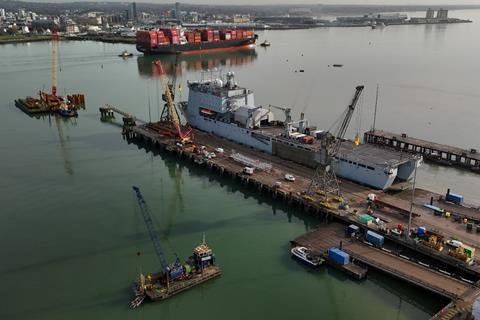
The project, which is maintaining and future-proofing the 40-year-old Falklands Jetty for the Ministry of Defence (MoD) and commercial operations, won the Best Project Asset Maintenance Award at the Institution of Civil Engineers (ICE) South East Awards.
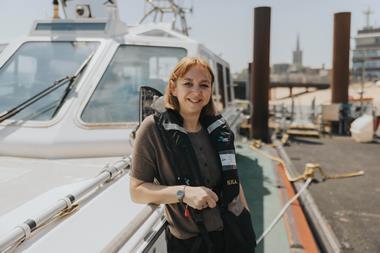
“I am incredibly proud to have led this project and to collaborate with our specialist supply chain partners to safeguard an existing asset that can continue to fully support both MOD and commercial operations at ABP Solent Gateway,” said Jason Boulter CEng MICE, ABP engineering project manager.
“Winning the award underscores our commitment and teamwork to deliver on time and achieve our goals. It has been a pleasure working alongside Boskalis Westminster, Knights Brown and Ramboll.”
Vessel accommodation
In 2023, ABP acquired Solent Gateway, the operator of Marchwood Military Port, with plans for its development.
The landside development, known as Phase 1, has been completed and includes 21 acres of open storage, a new security facility and port entrance, including 60 acres of off-site biodiversity net gain (BNG) within the New Forest.
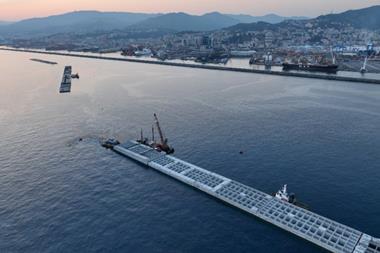
This project, known as Phase 2, will maintain the Falklands Jetty, ensuring it remains capable of accommodating a wide variety of vessel sizes for at least another 40 years.
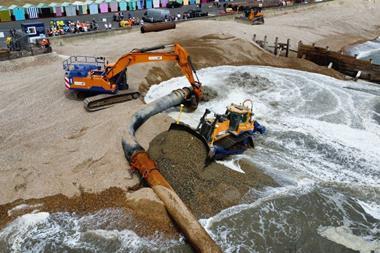
Backed by a GB£17.5 million investment, the scope of works included deepening the berth, constructing two new dolphins and increasing the load capacity of the existing mooring bollard and fixed fender configurations.
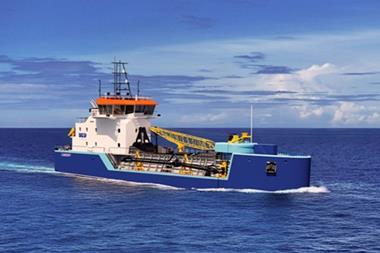
These works will enable ABP Solent Gateway to continue to accommodate commercial and military vessels, removing the current tidal and wind restrictions associated with the existing marine infrastructure. Thereby increasing the jetty’s usage and improving the port’s ability to berth vessels at all states of tide.
The engineering team at ABP have been working with local supply chain partners to tackle the project’s complex challenges, including a strict winter schedule from December to March to minimise the impact on salmon migration and other marine ecosystems.
Preserving the existing infrastructure has been crucial to avoid building a new berth. Due to its location, most of the work - such as site investigations and pile installations - was conducted over water.