![MaritimeJournal[Seawork]](https://www.maritimejournal.com/wp-content/uploads/2026/09/MaritimeJournalSeawork.svg)



Historic Adriatic sea ports face large-scale transformation
A wave of construction is reshaping both shores of the Adriatic, as ports across Italy and Croatia undergo their most ambitious overhaul in decades.
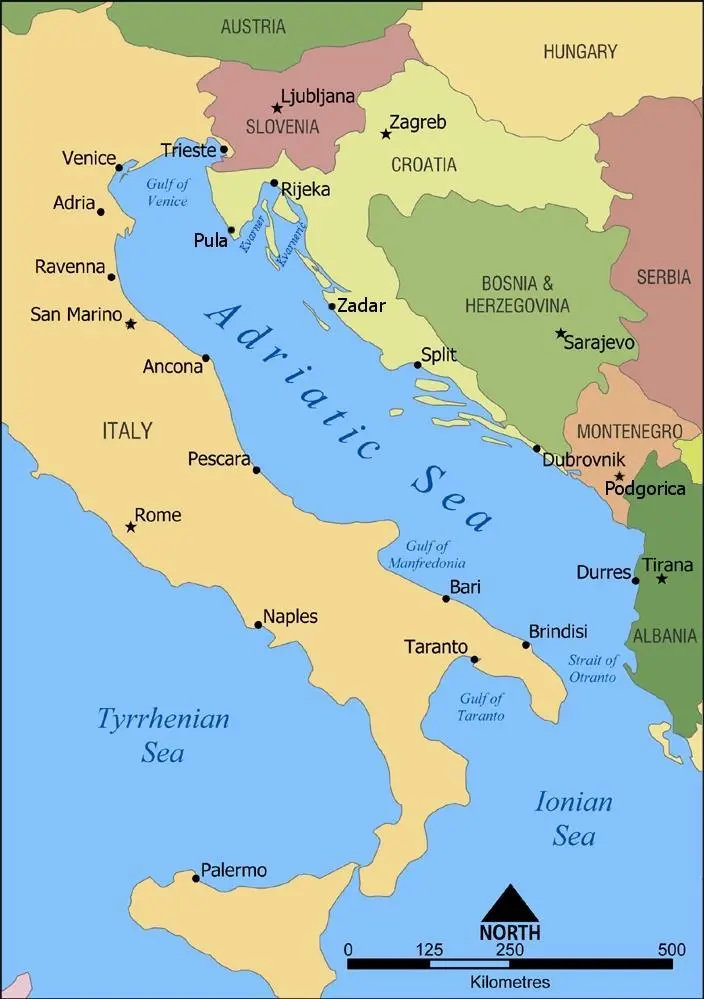
More than €340 million in maritime infrastructure investment is being poured into Adriatic ports on both sides of the water, according to the Adriatic Sea Tourism Report 2026 by research firm Risposte Turismo, with €252 million directed towards projects on the Italian Adriatic coast and at least €90 million targeted at ports along the Balkan shore.
The programme spans cruise terminals, shore power electrification, dredging operations and luxury marina construction, and in several locations, physical works are already well under way.
Ravenna: A new homeport for the cruise industry
Completion of the most technically ambitious individual project, the new 10,000m2 cruise terminal at Porto Corsini in Ravenna, is expected by the end of this year.
The project involves the construction of an 8,800-metre quay, a two-storey terminal building with a 5,000m² footprint, and three mobile boarding bridges.
The terminal, designed by Atelier(s) Alfonso Femia, will connect ships to the terminal via an elevated walkway running the length of the pier, giving passengers sea views as they embark via new-generation mobile boarding bridges. The project is targeting LEED certification, with water efficiency, renewable energy production, and sustainable materials sourcing built into its design brief.
Running alongside the terminal build is a major cold ironing installation by Italian engineering company Gemmo SpA. It will feature an 8km-long cable duct integrated into the terminal project, plus an additional 3.5km pipeline connecting to a 20MW solar panel plant owned by the Port System Authority.
A total of €68 million has been allocated to Porto Corsini’s operational launch and cold ironing system combined.
Venice and Ancona: Shore power at scale
In Venice, €90 million has been allocated to cold ironing infrastructure both in the island city itself and in the Porto Marghera and Fusina industrial port areas.
Ancona has separately invested €9.8 million into the electrification of its ferry berths, while Chioggia is advancing €6 million in cold ironing alongside €9 million in maintenance dredging works.
Cold ironing systems at this scale require significant electrical engineering: high-capacity transformer substations, cabling rated for the shore-to-ship interface, and frequency converters where ships operate on different electrical standards from the national grid.
At these ports, contractors must also work around live port operations, requiring careful sequencing and temporary diversions of vessel traffic during critical installation phases.
Croatia: Mega-yachts and a new ferry terminal
Across the sea, Croatia is undergoing its own transformation.
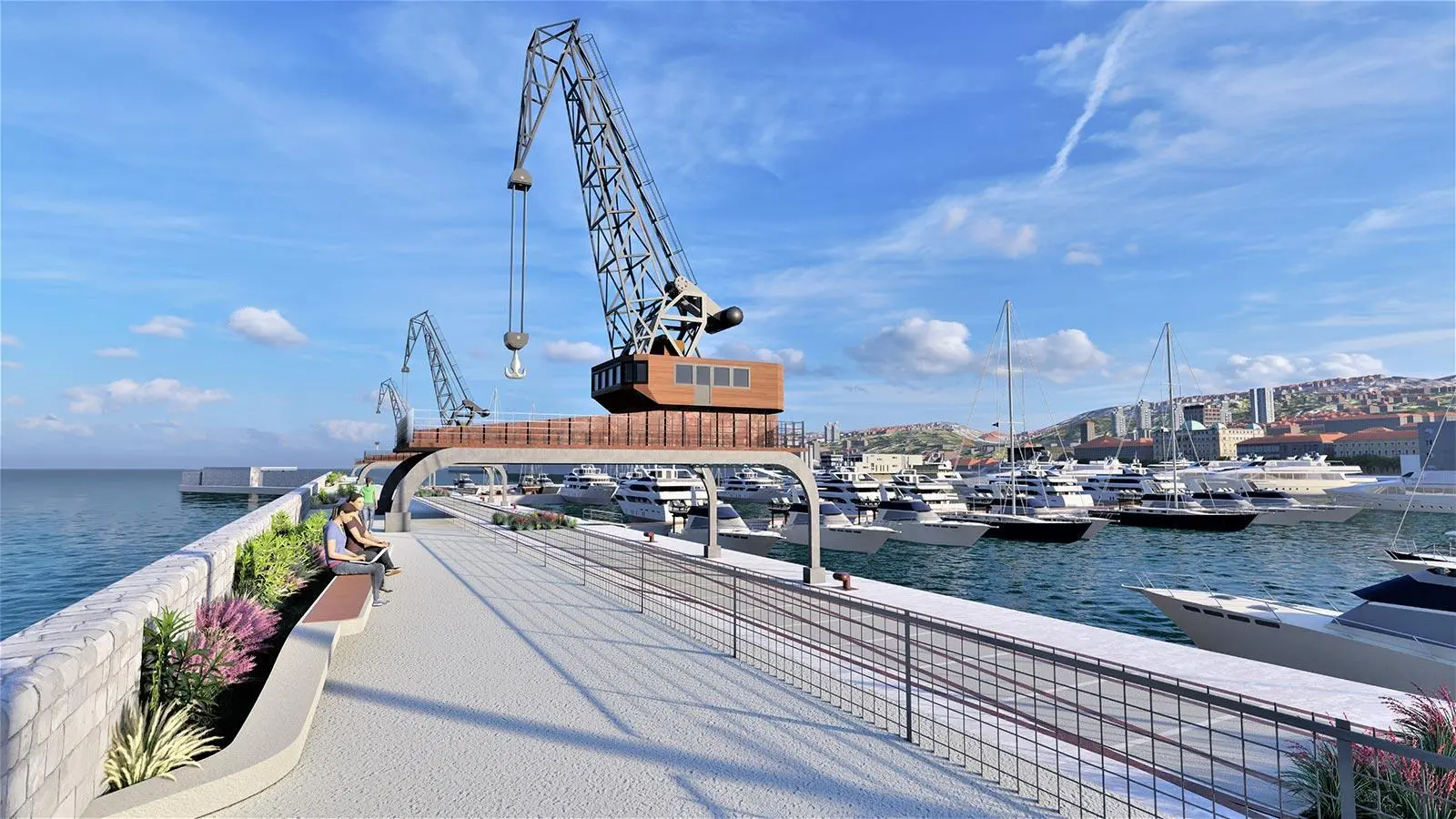
The headline project is the new ACI Marina Rijeka at Porto Baroš – a €50 million development described as the largest nautical investment in Croatian history. The marina will deliver more than 230 berths with an average vessel length of 19 metres, purpose built to receive mega-yachts, and spanning a maritime domain of more than 105,000m².
The concession has been awarded for 30 years.
The project is a collaboration between Adriatic Croatia International Club (ACI) and the GITONE Group, a company connected to the Lürssen shipbuilding dynasty – the German family firm famous for building some of the world’s largest luxury superyachts.
Stage 1 of construction focuses on marina infrastructure including pontoons, moorings, and a new reception building; Stage 2 covers a new refuelling station. A public call for seabed cleaning works at the Porto Baroš port area was published in early 2025, and the project is targeting full opening for the 2026 season.
In Split, a new ferry terminal has been built for more than €17 million, while in Šibenik a new €8 million cruise hub has been inaugurated.
Additional investments totalling €9 million cover berth expansions at marinas across Croatia, Montenegro and Slovenia.
Bari, Brindisi, Manfredonia: dredging for larger vessels
Further south, dredging works are under way in Bari, Brindisi, Manfredonia and Barletta, enabling these ports to accommodate larger vessels and increased maritime tourism traffic. Bari’s second cruise terminal, valued at €11.5 million, is nearing completion. Dredging at these Adriatic ports typically involves trailing suction hopper dredgers removing sediment from approach channels and berth pockets, with careful management of spoil disposal in line with Italian environmental regulations.
“The analysis highlights strong momentum on both shores of the Adriatic, with projects ranging from the construction of terminals to dredging, from the opening of new nautical marinas to the energy efficiency improvement of ports,” said Francesco di Cesare, president of Risposte Turismo.
With an Adriatic Sea Forum scheduled for Venice next month, the region’s port authorities, engineers and investors will be gathering to take stock of what is shaping up to be the most significant transformation of Adriatic maritime infrastructure in a generation.