

HyNet has announced five new priority projects now entering negotiations to connect to its UK CO2 transport and storage network.
These projects are set to deliver the country’s first low-carbon cement, low-carbon hydrogen, and energy from waste with CO2 capture.
“Today’s news is another clear signal that the UK is serious about delivering carbon capture and storage,” said Olivia Powis, chief executive of the Carbon Capture and Storage Association (CCSA).
“The build-out of HyNet not only strengthens energy security and climate action, but it also brings real, skilled jobs and vital long-term investment to communities in the North West and North Wales.”
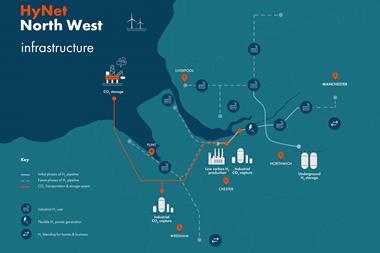
Two new projects – Connah’s Quay Low Carbon Power in North Wales and Evero’s Ince Bioenergy with Carbon Capture and Storage (InBECCS) in Cheshire – join three existing priority projects: Protos Energy Recovery Facility (Encirclys), Padeswood Cement Plant (Heidelberg Materials), and Hydrogen Production Plant 1 (EET Hydrogen).
While the announcement is welcomed, the CCSA has warned of a growing standby list of projects that also require support. Powis added that a long-term plan is essential to bring additional projects to market, fully use the UK’s CO2 storage capacity and preserve industrial competitiveness.
The announcement follows major milestones in UK CCUS, including financial close on Liverpool Bay CCS (April 2025), and is backed by up to £21.7 billion (€25 billion) of taxpayer support over 25 years, as well as £9.4 billion committed in the latest spending review to scale the UK’s carbon capture and storage sector.