![MaritimeJournal[Seawork]](https://www.maritimejournal.com/wp-content/uploads/2026/09/MaritimeJournalSeawork.svg)


WATCH: Rotterdam’s hydrogen’s future takes shape
Europe’s largest industrial port is fast becoming a hydrogen hub for the continent, with big ambitions and concrete plans all taking shape.
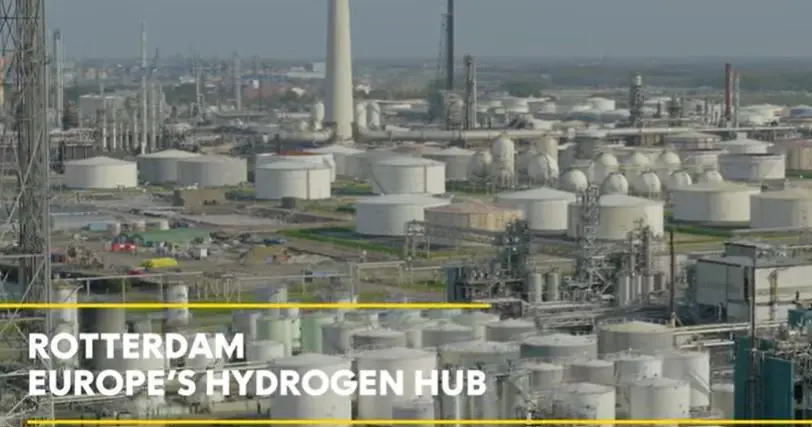
Plans are taking shape to transform the Port of Rotterdam into a hydrogen hub at the cost of several billion euros.
As Europe’s largest port and industrial cluster – handling more than 13% of all energy used on the continent – Rotterdam is positioning hydrogen as a cornerstone of its transition to a net-zero economy by 2050, with an interim goal of cutting CO₂ emissions by 55% by 2030.
The implications for shipping, marine fuels and port engineering are profound.
The port’s strategy is based on developing a hydrogen value chain in parallel: production, import, storage, pipelines and demand.
Multiple final investment decisions have already been taken, and construction of hydrogen infrastructure began in the port in 2023. This shared infrastructure model allows multiple companies to connect, lowering costs and accelerating deployment.
Port of Rotterdam Authority says it acts as a ‘matchmaker’, bringing together exporters of green and low-carbon hydrogen, industrial users and logistics operators across borders.
From offshore wind to molecules
A critical driver of Rotterdam’s hydrogen plans is offshore wind.
By 2030, 21GW of wind capacity must be installed in the North Sea according to set targets, with 7.4GW landing directly at the Maasvlakte.
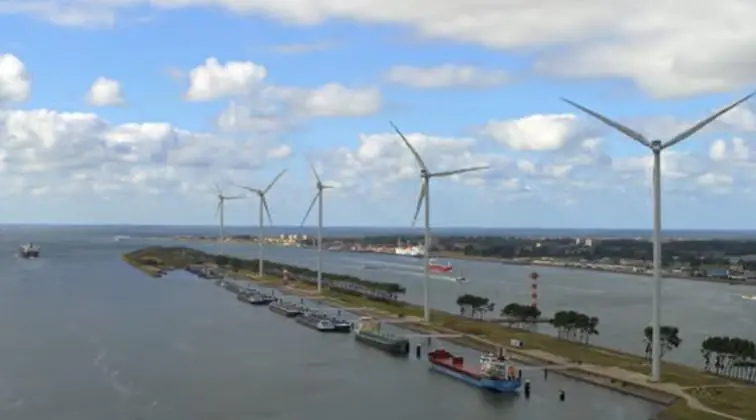
In 2022, the first 1.4GW from the Hollandse Kust Zuid wind farm was connected to the port’s electricity grid via TenneT’s onshore substation. Another 6GW will follow before the end of the decade, making Rotterdam the landing point for a third of all Dutch offshore wind capacity.
This power will not only supply the grid, but also feed large-scale electrolysers, which means the hydrogen produced can be classed as ‘green’ in the rainbow of colours attributed to the gas depending on how it is made.
Some electricity will be converted directly into green hydrogen onshore, while future plans also consider hydrogen production at sea.
And even though the target is huge, this is a drop in the ocean long term: the Dutch government aims to add another 50GW of offshore wind between 2030 and 2050, and discussions are under way to route roughly a third of that energy to Rotterdam, either as electrons or as hydrogen molecules.
Industrial-scale hydrogen production
At Maasvlakte 2, Rotterdam has established dedicated ‘conversion parks’ for hydrogen production.
Construction is already under way on the first major project, Shell’s Holland Hydrogen 1, a 200MW electrolyser that will produce green hydrogen for use in the Shell refinery, replacing existing ‘grey’ hydrogen. (If hydrogen is labelled ‘grey’, it has been produced by steam methane reforming, which emits about 10 tonne of CO₂ per tonne of hydrogen produced.)
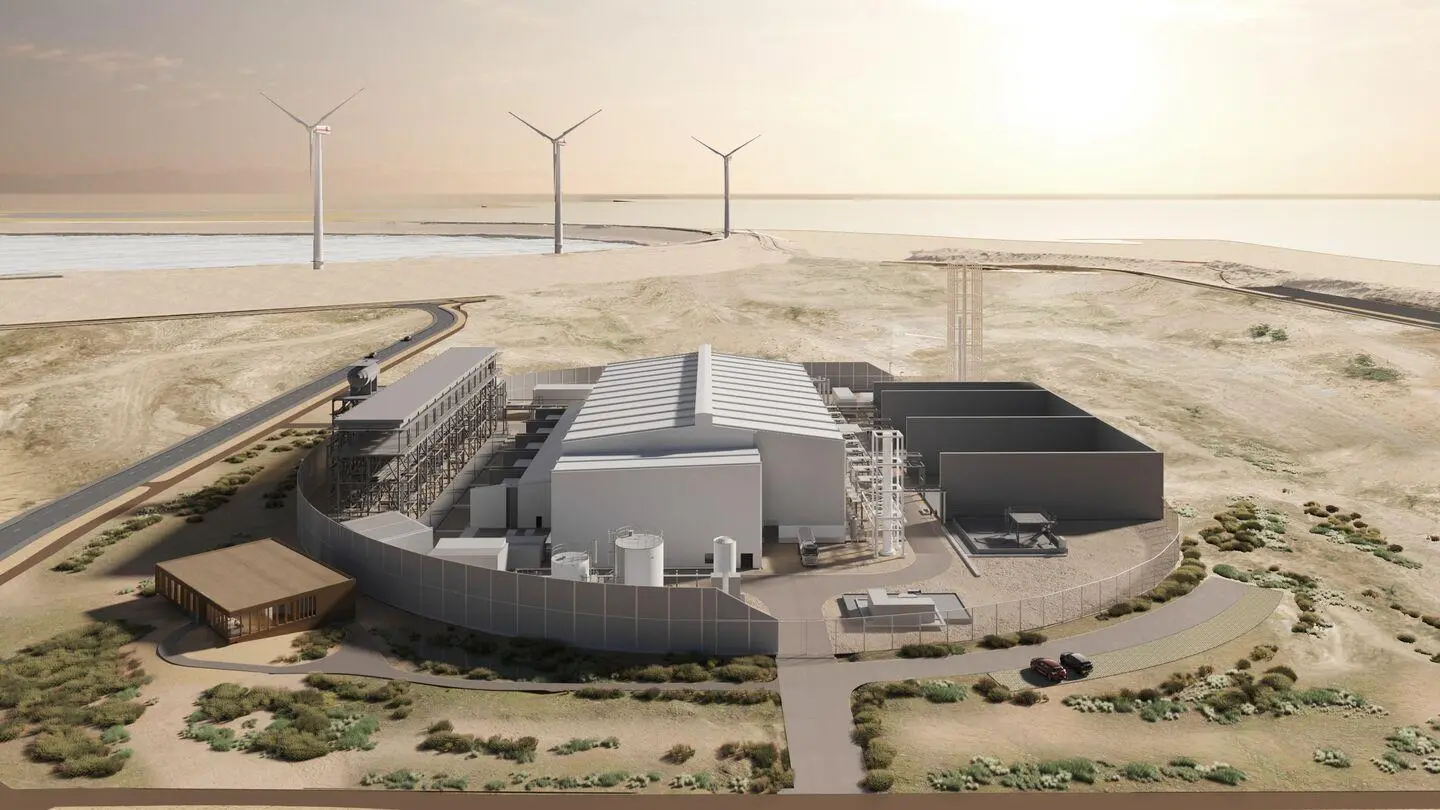
The plant sits in Conversion Park One, where four electrolysers together will ultimately deliver around 1GW of capacity.
By 2030, the port aims to produce 2-2.5GW of electricity to power the electrolyser, with multiple 200–250MW plants planned by companies including BP, HyCC, Air Liquide and others. Uniper has announced plans for a 500MW electrolyser adjacent to its Maasvlakte power plant, while Eneco has applied for permits for an 800MW facility near Enecogen in Europoort. Grouping these plants allows the shared use of heavy engineering infrastructure – power connections, water supply and pipeline access – reducing complexity and cost, says the Port of Rotterdam.
Engineering the hydrogen backbone
As well as producing the gas, Rotterdam is simultaneously building the transport systems required to move hydrogen to ships, refineries and inland industry.
Construction of the national hydrogen network began in the port in the second half of 2023, and when completed, it will extend to around 1,200 kilometres, connecting five Dutch industrial clusters and linking to Germany and Belgium.
From 2030 onwards, this open-access network is expected to cost approximately €1.5 billion and will integrate local hydrogen production, import terminals, port-based offtakers and transit routes to the hinterland.
The engineering challenge includes pipeline construction, compression, storage and safe integration with existing port operations.
A key international extension is the Delta Rhine Corridor, a bundle of pipelines linking Rotterdam with Chemelot and North Rhine-Westphalia.
The corridor will include pipelines for hydrogen, CO₂ and ammonia, as well as high-voltage direct-current electricity connections from offshore wind.
Designated a project of national importance, the corridor could become operational around 2029, reinforcing Rotterdam’s role as an energy gateway for German industry.
Imports, shipping and marine fuels
Because Europe consumes more energy than it can sustainably produce, hydrogen imports are essential, said Port of Rotterdam Authority’s CEO, Boudewijn Siemons.

Rotterdam is preparing for this reality by upgrading tank terminals to handle ammonia and other hydrogen carriers. Facilities to crack ammonia back into hydrogen are being studied, while inland barging and pipeline distribution are planned to move hydrogen efficiently through the port and beyond.
This has direct relevance for shipping and marine fuels: hydrogen and hydrogen-derived fuels such as ammonia are increasingly being viewed as alternative options for fuelling maritime transport, despite the danger.
Rotterdam’s role as both a bunkering hub and a production centre positions it to supply these fuels to vessels calling at the port, while also supporting downstream industries producing synthetic fuels for shipping, aviation and trucking.
Not all hydrogen in Rotterdam will be green from day one. Existing grey hydrogen production by companies such as Air Products and Air Liquide is being converted to ‘blue’ hydrogen through Porthos, the carbon capture and storage project that will store CO₂ in depleted gas fields beneath the North Sea. (What makes hydrogen ‘blue’ is this carbon capture process.)
This allows immediate emissions reductions while green capacity scales up.
“We are currently building almost every component required to make the new energy system a reality,” said Siemons. “Offshore renewables, electrolysers, CCS, import terminals and pipelines are all advancing in parallel. We are building the infrastructure of the future providing off-takers in the port and throughout north Western Europe with the products they need.”