


An inland container vessel has completed an autonomous navigation trial in the Port of Rotterdam, demonstrating the potential application of automated vessel control systems in one of Europe’s busiest maritime environments.
The vessel, MS Letitia, sailed between terminals in Rotterdam as part of the EU-funded MAGPIE project, which is evaluating technologies designed to improve the efficiency of port and logistics operations.
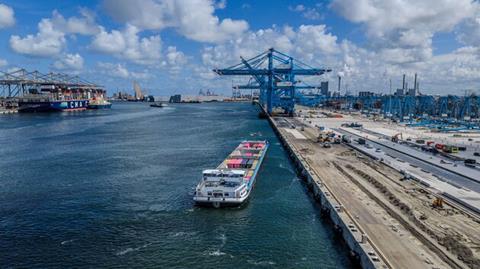
During the trial, the vessel carried out undocking, transit and docking manoeuvres using autonomous navigation systems while operating in active port waters.
According to the Port of Rotterdam Authority, the vessel navigated from Amaliahaven on Maasvlakte via Europoort and the Nieuwe Waterweg before arriving at Waalhaven. A qualified skipper remained on board throughout the voyage and retained responsibility for the vessel, with the ability to intervene whenever required.
The trial focused on the integration of sensor systems, navigation software and decision-support tools capable of controlling the vessel during normal operations. The autonomous system was required to identify surrounding traffic, assess navigational situations and execute manoeuvres while complying with inland navigation regulations and operating safely within a mixed-traffic environment.
For commercial operators, the significance lies less in the prospect of fully unmanned vessels and more in the development of technologies that could reduce workload, improve situational awareness and support decision-making on board. The systems tested on Letitia are intended to provide varying levels of autonomy while maintaining human oversight.
The demonstration also formed part of wider work on digital information exchange between vessels and shore authorities.
Previous MAGPIE trials involving Letitia examined ‘intention sharing’ technology, allowing vessels to communicate planned routes and manoeuvres electronically to improve traffic management and collision avoidance.
The Rotterdam trial highlights how autonomy is increasingly being tested in real operating conditions rather than controlled environments. While regulatory and operational barriers remain, the project provides a practical example of how autonomous navigation systems may be integrated into commercial inland shipping over the coming decade.
“Autonomous sailing enables new logistics concepts that improve the flexibility, efficiency and reliability of inland shipping, which is an important hinterland transport modality for the port of Rotterdam,” said Oscar van Veen, Director of Innovation at the Port of Rotterdam Authority.
“With the growth in freight throughput, it is essential that inland shipping maintains and expands its share of freight transport. Autonomous sailing could play a role in this.”