

A growing order book across Europe suggests the continent’s emerging fleet of foiling ferries is finally beginning to expand.
Europe’s emerging fleet of foiling ferries remains small, but a growing order book suggests the sector is on the cusp of rapid expansion, with operators and manufacturers positioning the technology as a key part of future coastal transport.
At the moment, only a handful of hydrofoil ferries are in regular commercial service across Europe.
The most prominent example is in Stockholm, where a vessel developed by Candela Technology has been operating in public transport service following pilot trials. The company describes its P-12 model as designed for “high-speed, zero-emission passenger transport” using submerged hydrofoils to reduce drag and energy consumption.
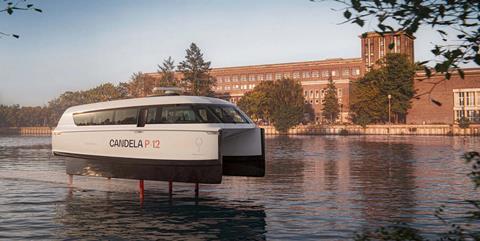
Despite this limited operational base, the pipeline of confirmed orders and announced projects is significantly larger. In Norway, ferry operator Boreal has partnered with Candela on a programme to deploy electric hydrofoil ferries on coastal routes, with multiple vessels planned as part of a broader shift toward zero-emission transport. Candela has said its vessels are intended to ‘combine high speed with low energy use’, positioning them as an alternative to both conventional ferries and road transport.
Belfast takes delivery of 3 foiling ferries
In the UK, Belfast Harbour took delivery of three electric hydrofoil vessels developed by Artemis Technologies in January. The company’s EF-24 design uses electric propulsion and active control systems to maintain stability while foiling. Artemis Technologies says its vessels are designed to ‘deliver high-speed, zero-emission maritime transport’, although the Belfast units are currently in testing and integration phases rather than full commercial service.
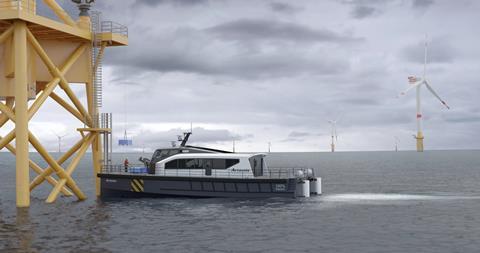
The ability of the vessels to lift their hull above water, significantly reducing drag, enabling lower energy consumption and higher operating speeds compared with conventional displacement ferries, is particularly good for short coastal routes and commuter services.
Artemis Technologies says its hydrofoil technology can reduce energy use by up to 80% compared with traditional fast ferries, while also cutting wake and noise. Artemis similarly emphasises the role of hydrofoils in enabling “efficient, high-speed electric vessels” suited to urban and regional transport networks.
New explorers
Beyond these early deployments, a wider group of operators and public authorities are exploring the technology.
Norwegian transport authorities have outlined ambitions for large-scale adoption of zero-emission high-speed ferries, with hydrofoils identified as one of the enabling technologies. Several coastal municipalities are assessing routes where conventional ferries are either too slow or too energy-intensive to electrify effectively.
Legacy hydrofoil ferries continue to operate in parts of southern Europe, particularly in Italy, Greece and Croatia. However, these vessels are typically diesel-powered and based on older designs. The current wave of investment is focused on electrified systems with advanced control technologies, demonstrating a distinct shift in engineering and operating mindset.
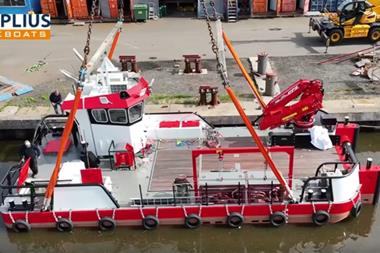
Artemis Technologies says its vessels are suitable for multiple vessel types, including passenger ferries and workboats, and has delivered a crew transfer vessel. Candela has also said its designs are applicable across different markets.
Other considerations
Supply chain considerations are also beginning to emerge. The transition to foiling ferries requires new capabilities in areas such as lightweight composite structures, control software and electric propulsion systems. At the same time, operators must consider maintenance regimes and crew training for vessels that behave differently from conventional ships.
The combination of tightening emissions regulations, rising fuel costs and demand for faster transport links is creating a niche where hydrofoil ferries can compete.
Candela describes its initial deployments as part of a broader effort to ‘scale electric hydrofoil vessels globally’, while Artemis Technologies has pointed to opportunities in both European and international markets.
For now, the number of foiling ferries in operation across Europe remains limited.
But with multiple vessels on order, ongoing trials and increasing interest from operators, the sector is moving towards a phase where commercial deployment could accelerate rapidly.
Whether that expansion materialises will depend on the ability of manufacturers to deliver vessels at scale, and of operators to integrate them into existing transport systems.