
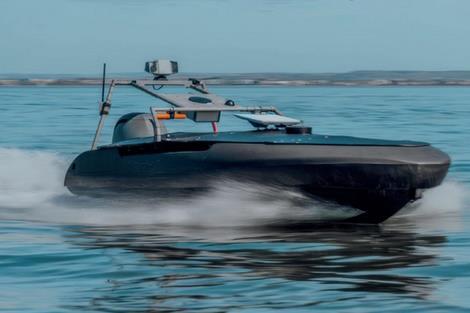



Across Europe’s maritime sector, operational agencies are rethinking the way they specify and deploy high-performance rigid inflatable boats (RIBs).
Where once a fleet might comprise several specialist craft – each tailored to a specific task – many organisations are now seeking a single platform capable of fulfilling a range of roles without compromising on core performance.
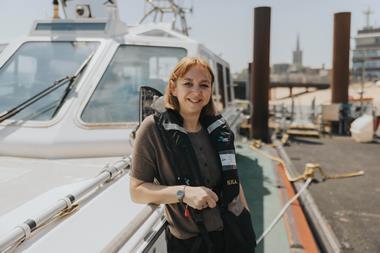
This shift is being observed by Andy Andrews, European representative for Protector Boats through PB Europe, part of the Ancasta Group. They were first launched in Europe at the commercial marine expo Seawork.
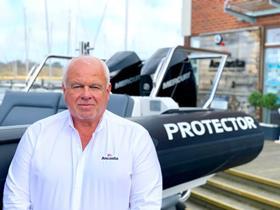
Drawing on a 25-year career in the Royal Navy, followed by extensive commercial RIB supply and training work, Andrews has a unique vantage point on how operational needs are evolving.
“We are seeing a clear move away from highly task-specific vessels,” says Andrews. “Instead, agencies are prioritising adaptable platforms that can be configured for diver support, cargo transport, towing, or high-speed interception – often within the same operational cycle.”
Drivers behind the change
Several converging factors appear to be driving this trend towards multi-role capability:
- Operational efficiency – Reducing the number of vessels in service lowers maintenance demands and simplifies fleet management
- Transportability – Craft that can be moved by trailer or within a 40-foot container allow rapid redeployment to different locations
- Performance parity – With illegal operators increasingly using high-speed craft, enforcement agencies require vessels capable of matching or exceeding those capabilities
- Equipment integration – The ability to accommodate surveillance systems, intelligence gathering equipment or other specialist cargo has become a key consideration
- All-weather operation – Consistent performance in challenging sea states ensures operational readiness.
This evolution in requirements is being seen across multiple user groups, from fishery protection services and harbour authorities to border patrols and commercial operators.
Emerging capability requirements
Although high-speed handling remains central to many activities, agencies are specifying additional capabilities that broaden operational scope. Andrews notes three requirements in particular that are being raised more frequently:
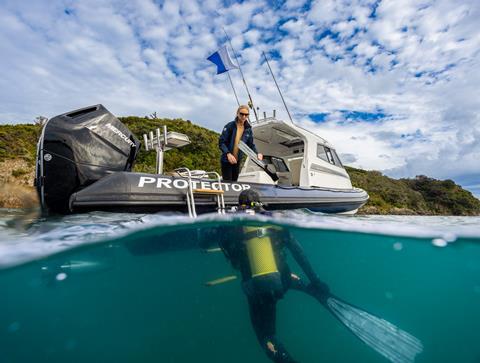
Diver support capability – including ease of water access and space for dive gear
Enhanced cargo capacity – enabling the transport of equipment, humanitarian aid or specialist tools
Increased towing capacity – supporting tasks from yacht recovery to moving workboats.
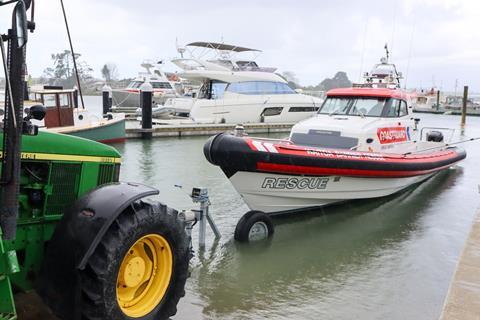
These demands are being reflected in procurement programmes worldwide. The New Zealand Coastguard, for example, operates a national fleet of 24 Protectors in various configurations, while the Norwegian Police and New Zealand Customs Service have also adopted the platform for roles requiring both endurance and adaptability.
While a number of manufacturers are responding to these new requirements, the Protector range has established a track record in multi-role service. Designed for high levels of customisation, the platform allows operators to configure engine type, deck layout, seating arrangements and onboard facilities to match operational needs.
Andrews emphasises that the adaptability extends to crew welfare: enclosed helms, climate control, sleeping bunks and galley facilities can be specified for longer missions, without compromising operational performance.
“Crew well-being, and therefore endurance, is a critical factor,” he says. “A vessel that offers protection from the elements and space for rest can significantly extend operational effectiveness.”
Sector-wide implications
The move towards fewer, more versatile vessels may have far-reaching implications for procurement, maintenance and training. Maritime organisations’ fleets could become simpler to manage, with reduced parts inventories and more uniform training requirements.
However, it also places greater emphasis on selecting a platform capable of handling a wide range of conditions and tasks.
In Andrews’ view, the transition is unlikely to reverse.
“The operational and economic benefits are clear,” he says. “Single-role craft will still have a place in highly specialised areas, but for most agencies, a capable, adaptable, high-performance platform offers the best balance of flexibility and cost-effectiveness.”
Outlook
Looking ahead, Andrews expects further development in propulsion options – including hybrid and electric systems – though he cautions that operational range and endurance remain key constraints for many commercial and enforcement roles.
“The technology is advancing, and electric RIBs will find their place,” he says. “But for now, conventional propulsion offers the speed, range and reliability required for most multi-role operations.”
With operational demands broadening and resources under pressure, the emphasis on adaptability is likely to continue shaping both vessel design and procurement strategies. In that context, platforms with proven multi-role capability - and the seakeeping to maintain performance in adverse conditions - are well positioned to meet the sector’s evolving needs.