



Why would the UK order vessels for its own Ministry of Defence from the Netherlands rather than entrust the builds to its own shipyards?
The question was raised in the UK parliament’s House of Lords when it came to light that 24 support vessels had been ordered from Damen in the Netherlands instead of from domestic shipyards.
Is the UK shipbuilding industry incapable of fulfilling such an order competitively? Or is this simply an indication of the global nature of commercial and military-related shipbuilding, where winners and losers emerge in each country?
Serco has been awarded three contracts with a combined value of more than £1 billion (€1.1 billion) over 10 years, including delivery of in-port services at His Majesty’s Naval Bases at Devonport, Portsmouth and Faslane.
Serco’s association with the Royal Navy stretches back to 1996 and currently involves 91 vessels carrying out work, including towing; pilot and passenger transfers; cargo loading including munitions; waste removal; mooring and buoyage maintenance; and various engineering services.
The contract discussed in parliament included 24 new-build vessels of various types with Netherlands-based Damen Shipyards Group under the Defence Maritime Service Next Generation (DMS NG) Vessel Replacement Project (VRP), Serco acting as prime contractor and Damen as subcontractor.
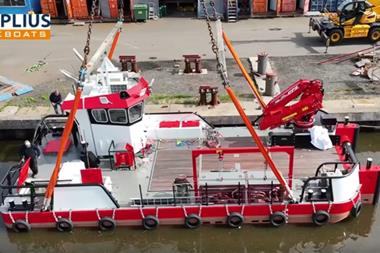
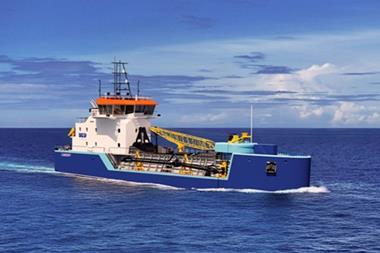
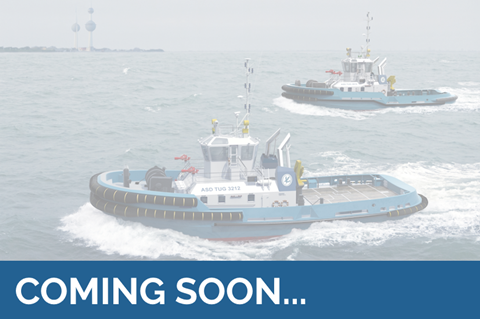
A detailed breakdown of the vessel types has not been revealed but includes ASD Tugs, RSD Tugs, pilot boats, barges and crane barges, all supporting modernisation of the navy’s auxiliary fleet and replacing the ageing vessels currently in operation.
Questions in the House
Why the vessel order did not go to a UK-based company was raised in the House of Lords by Lord Beamish (Kevan Jones), who asked: “What steps is the Ministry of Defence taking to maximise UK-manufactured products in its procurement decisions?”
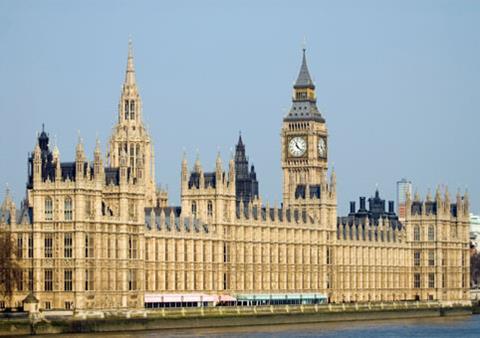
Lord Coaker (Vernon Coaker), Minister of State for the MOD, said the UK defence sector should be more competitive, innovative and resilient, and Lord Beamish responded that under the national shipbuilding policy the MOD is committed to placing shipbuilding orders in UK yards to ensure ‘a continual drum beat of work’.
“Why are we exporting UK defence jobs to Holland?” he asked. “I ask my noble friend to follow the German government’s recent announcement that they will cancel their frigate order with Damen and to place those much-needed orders in UK yards.”
Lord Coaker said he would look at it and said shipbuilding was ‘seeing something of a renaissance in our country’, highlighting the winning of the contract from Norway for Type 26 frigates to be built on the Clyde.
Questions were also raised over the ‘incredibly bureaucratic’ defence procurement process and whether the decision was affected by the issue of UK-made kit rather than ‘buying stuff off the shelf’.
Lord Coaker said wartime procedure, when red tape could be cut for urgent operational requirements, should be replicated in peacetime.
“We need to ensure that sort of attitude and culture operate in peacetime,” he said. “It should not take a crisis or war to deliver the things we want and the equipment our troops need.”
UK alternatives?
Damen’s advantages when considering the range of vessels required are clear to see. It operates 35 shipyards over five continents including in China and Vietnam, where low labour costs offer a competitive edge; indeed it’s not unusual for tugs to be built in Asia and shipped across the world to customers in Damen’s home country.
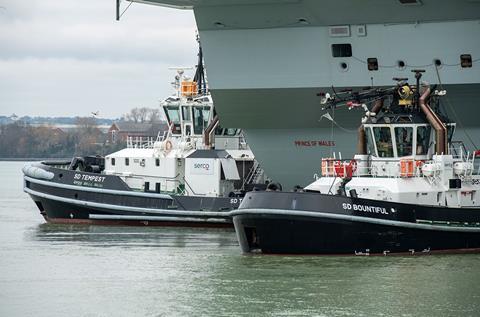
Its series, build-for-stock policy allows fast delivery times, with basic vessels adapted at the final stages to suit individual requirements. Damen also provides extensive after-sales support, an important consideration for vessels that are ultimately funded by taxpayers and expected to live a long life.
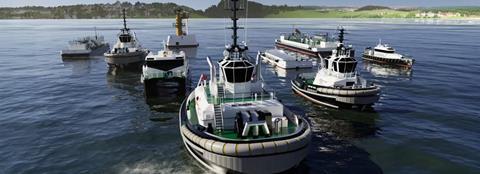
The Dutch shipbuilder’s vessel catalogue is extensive, covering both commercial and military vessels, from RHIBs to container ships and naval destroyers, as well as its prolific tug and workboat production lines.
The vessels all appear to be within Damen’s portfolio, meaning a ‘one-stop-shop’ solution. Another factor is Serco’s extensive fleet list, which includes Damen-built vessels and follows a similar 29-vessel order with Damen in 2007.
The UK is rich in both experience and capability within the shipbuilding sector, particularly with smaller vessels, and while not on Damen’s scale is capable of producing any of the vessels in the Serco/MOD order.
Several UK boatyards have gained a solid reputation in the offshore wind industry crew transfer vessel market, Diverse Marine and Alicat/South Boats on the Isle of Wight being examples. Family-owned Goodchild Marine has experienced a solid stream of orders for its pilot boat range.
Turning to larger shipyards, Harland & Wolff, A&P Group, Cammel Laird and Ferguson Marine are experienced in building modules for large vessels, and returning to the top of the story, BAE Systems’ continuation of the Royal Navy’s Type 26 frigate programme with a similar commitment from the Royal Norwegian Navy reflects shipbuilding’s global nature.
The answer to Lord Beamish’s questions may be as simple as the ‘one-stop-shop’ solution, supported by Serco’s influence on the back of its own Damen experience, and may possibly form the basis of the government’s ‘further look’ into the subject.