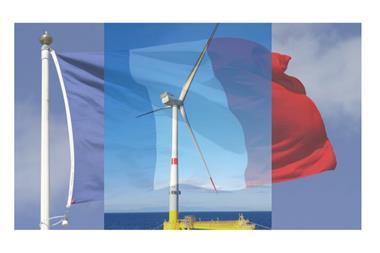



A seabed lease has been finalised to allow the world’s largest offshore wind farm, Dogger Bank, to be expanded, even though the UK grid cannot cope with existing wind power generation.
Joint venture developers Equinor and SSE Renewables, who each own 50% of the Dogger Bank D development off the northeast coast of England, say 1.5GW more electricity will be generated on top of the 3.6GW already under construction in the North Sea. The lease was signed with the Crown Estate, which owns all the seabed around the UK.
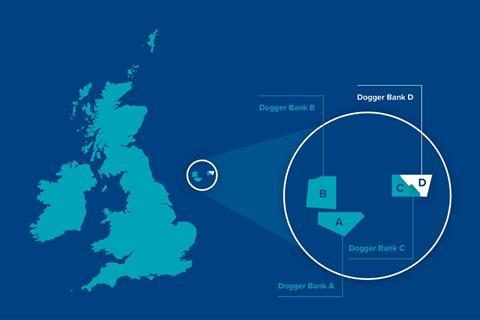
An eight-week consultation process has just been concluded, detailing how 113 offshore wind turbines will be installed on fixed bottom foundations along with another two substation platforms.
The site will cover 262 square kilometres.
Yet the UK electricity grid cannot cope with the amount of electricity already being generated by offshore wind farms, which regularly have to switch off their turbines – and are paid by the tax payer to do so.
Exact figures are difficult to come by, but some estimates put the annual figure paid to switch turbines off at £500 million (€580 million).
According to the Financial Times, Britain’s wind farms were paid to switch off 13% of the time in 2024, although this is not broken down into on and offshore wind.
“The grid operator had to pay £2.7bn during the 2024-25 financial year to make sure electricity supply and demand was constantly balanced, with wind farms a “major driver” of the bill,” it says. The National Energy System Operator (NESO) had not replied to MJ’s request for comment or confirmation at the time of writing.
Equinor pulls out of Australia
Days before the expansion of Dogger Bank was announced, Equinor pulled out of an Australian project, Novocastrian.
“The decision reflects a combination of project-specific factors and broader global challenges currently affecting the offshore wind industry, including rising costs and supply chain constraints,” a spokesman told Maritime Journal. “Following the decision not to proceed with the Novocastrian Wind project, we are assessing our position in the Australian market.
“There are no changes to the updated renewables ambition that we communicated at our Capital Markets Update in February. We said that we adjust the growth pace within renewables to a 10–12GW ambition by 2030 (from previously 12–16 GW), high-grade the renewables portfolio and reset the cost base. As you point to, we have exited early phase BD markets, focusing on fewer markets.
“However, even with the adjustments we maintain a high execution activity, including three mega offshore wind projects in the making, Dogger Bank in the UK, Baltyk 2&3 in Poland and Empire Wind 1 in the US.”