


So many people wanted to give us their thoughts about the next 12 months that we have decided to run the feature in two parts. Here is Part 1 of our Look Ahead to 2026, listed in alphabetical order by organisation.
New vessels, evolving technology, decarbonisation-driven CTV market
Chartwell Marine managing director Andy Page
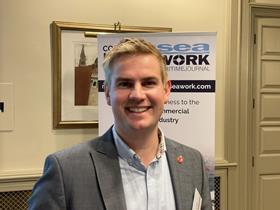
“In 2026, we expect to see a number of new vessels entering the market, both in Europe and the APAC region. We anticipate good vessel availability for owners to purchase or lease class leading crew transfer vessels. Technology continues to evolve with new propulsion systems, electric management systems, and hull form developments. The market remains focused on decarbonisation, while carefully balancing vessel capital purchase price and operational costs. Consistent vessel performance, reliability, and safety continue to be the charterers’ priority.”

Maritime leadership will become younger and more digital savvy
Copenhagen Business School programme director Irene Rosberg
There was a time we focused on efficiency and logistics. Now our focus has shifted to sustainability, geopolitics and digitalisation, which is driven by speedy technological advancements strict regulations and the disruptions we are facing due to the geopolitical challenges. I would expect this trend to continue in 2026. This also calls for a new approach to leadership, where the need to focus on these issues requires a different set of skill sets, not only in the leadership positions but also in the board rooms. We need to have the right skills in leading positions in the maritime industry. We see the demographics changing; we see younger and digitally literate professionals who are building a more inclusive, more diverse and a lot more digital savvy leadership pipeline. In a way, it is no more a requirement to have sailed to be considered for management jobs in the maritime industry, which in turn gives some of the competent female colleagues also a level playing field. We can see a change in that area as well: slow, but nevertheless a change.

Retaining seafarers through safety, well-being, technology
Danica Crewing Specialists CEO Henrik Jensen
In 2026 the industry must focus more on keeping experienced seafarers. Danica’s 2025 survey shows many plan to retire earlier, which makes it vital to improve safety, security and overall well-being if we want people to stay in the job. We also need to stop exposing crews to conflict zones and address the unfair treatment of innocent seafarers. Modern technology can help improve safety and cut emissions. With global uncertainty increasing, strong risk management will be essential.

Progress will be driven by energy efficiency and innovation
DNV CEO Maritime Knut Ørbeck-Nilssen
In 2026, the maritime industry’s decarbonisation progress will continue, driven by two forces: energy efficiency and technological innovation. The drive for a cleaner, more efficient future is progressing regardless of the regulatory postponement. Shipowners, cargo interests, financiers, and regional regulators are already shaping investment decisions, accelerating the shift toward better solutions. In the near term, energy efficiency and bio-fuel blends will be critical bridges, reducing emissions and operational costs while new fuel pathways and technologies mature. Over the longer term, supply of better fuels, along with port and infrastructure developments, and dual-fuel technologies will unlock additional decarbonisation achievements. Those who embrace flexibility, invest in skills, and foster cross-industry collaboration will lead the way, ensuring global shipping remains resilient, competitive, and a driving force for sustainable progress.
Regional decarbonisation advances, collaboration drives practical solutions
e1 Marine executive director Dave Lee
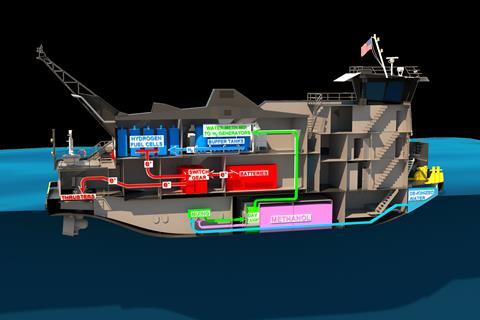
While global decarbonisation efforts might temporarily stall in 2026 until there is greater international regulatory alignment, regional initiatives in Europe, California and other progressive markets will continue to drive meaningful progress. Interest in clean-energy technologies remains high, though funding uncertainty has slowed momentum in some markets. In the year ahead, we expect collaboration between technology providers to accelerate as ports and operators look for scalable shore-power and clean-fuel solutions that can deliver results now. As integration between systems advances, demand for compact methanol-to-hydrogen power packages is emerging as a clear next step in practical maritime decarbonisation.

Maritime sector will follow evidence-based solutions
Fuelre4m head of Maritime Paul Bayliss
In 2026, the maritime sector will move further toward evidence-based decarbonisation, with shipowners demanding verified performance rather than long-term projections. This will accelerate the adoption of onboard data systems, strengthen collaboration with class and OEMs, and set higher expectations for transparent, independently validated results. The industry will favour technologies that deliver measurable efficiency gains on today’s fleet while creating a credible bridge to future fuels. Progress will belong to solutions that prove their impact at sea.
Operationalised intelligence and data to drive success
GenPro managing director Maria Theodosiou
In 2026, the maritime industry will shift decisively from digital experimentation to operationalised intelligence. Procurement, logistics, and technical teams will demand governed data, measurable ESG maturity, and AI tools that enhance—not replace—human expertise. We will see stronger supplier accountability, greater transparency across the value chain, and tighter links between cost control and sustainability. The companies that win will be those that treat data as an asset, not an afterthought, and build ecosystems rather than isolated systems.
Uncrewed vessel momentum will continue
GeoAcoustics CCO Richard Dowdeswell
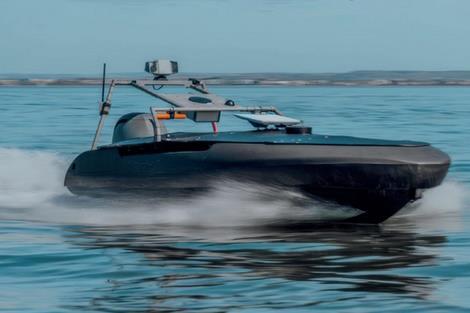
The momentum behind the application of Uncrewed Surface Vessels and ROVs for marine data acquisition will continue and we expect to see more integrations of our sonar systems on these vessel classes next year. We’re looking ahead to our collaboration with HydroSurv for their Offshore Wind Growth Partnership-funded project, which is based on the installation of a GeoPulse 2 3D sub-bottom profiling sonar system on a state-of-the-art REAV-45 battery-hybrid USV, with particualr focus on coastal and landfall surveys.
Resilient subsea sector adapts amid uncertainty
Global Underwater Hub chief executive Neil Gordon
Our Business Survey 2025 shows that while pressure (high costs, policy uncertainty, shaky project pipeline) will persist throughout next year, opportunities will emerge, specifically for those companies able to adapt. Our sector is and has always been resilient and its ability to diversify into overseas markets and growth areas such as offshore wind will be invaluable. Concerningly, with exports now accounting for 43% of all revenue generate by the UK subsea sector, this also heightens the risk of companies relocating. Alongside our industry peers, GUH will continue to press for clearer UK fiscal policy to help stabilise the market and create a more predictable environment for growth in the North Sea.
Marine shifts toward AI-driven autonomous operations
Hefring Marine CEO Karl Birgir Björnsson

Looking ahead to 2026, the marine industry will accelerate from passive monitoring to AI-driven operational and autonomous assistance. The interest in autonomy will surge across segments, from defence vessels reducing human exposure, to workboats optimising safety and efficiency under pressure, to leisure craft where owners expect experiences like kicking back and relaxing while the boat docks itself. Route optimisation, just-in-time arrival, and vessel-specific intelligence will become standard, driven by regulation, fuel costs, and insurance. The winners will be platforms that translate data into real-time decisions at the helm, autonomy-ready by design.
Decarbonisation, regulation drive transparent maritime operations
Idwal Maritime CEO Nick Owens
In 2026, the maritime industry will be shaped by accelerating decarbonisation, tighter regulatory expectations, and increasing scrutiny from charterers, financiers and cargo owners. Transparency, data quality and verifiable reporting will become central to commercial success. As fleets face greater pressure to demonstrate safety, efficiency and compliance, independent vessel condition insight will grow in importance. Those who embrace clearer standards, integrated digital workflows and evidence-based decisions will be best positioned to navigate a more complex operating environment.
Salvors prevent maritime disasters, seek sustainable support
International Salvage Union secretary general James Herbert
The salvage industry - through the members of the International Salvage Union - will continue to provide emergency response services around the world to vessels in danger and difficulty. They will help to prevent casualties turning into catastrophes; saving lives, preventing pollution and saving property from loss. Salvors will continue to seek recognition and support from their key stakeholders - the shipowners and insurers - to ensure that the industry remains financially sustainable.