


Britain’s first major pumped storage hydropower developments for decades have moved a step closer after three schemes secured provisional backing under a new electricity storage support programme.
Three schemes, all in Scotland, have been provisionally selected for support under the first allocation round of Ofgem’s new Long Duration Electricity Storage (LDES) Cap and Floor scheme, marking the first major regulatory backing for new PSH projects in Great Britain for decades.
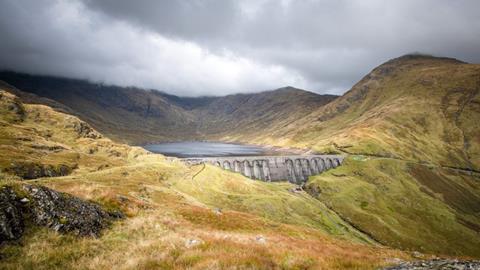
The energy regulator selected 16 projects, in total 7,645MW of long-duration electricity storage, had been selected in its “minded-to” decisions for the first application window. The portfolio includes pumped storage hydropower, compressed air energy storage, lithium-ion batteries and vanadium redox flow batteries.
The three PSH projects account for almost 4GW of the selected capacity, underlining the continued role of large-scale hydro storage in balancing a power system with increasing levels of renewable generation.
The British Hydropower Association (BHA) welcomed the announcement but said it should be viewed as the beginning of a wider programme of investment rather than its conclusion.
Kate Gilmartin, chief executive of the BHA, described the announcement as ‘the biggest boost for Pumped Storage Hydropower in decades’.
“It confirms that long-duration electricity storage is now recognised as essential national infrastructure for a secure, renewable electricity system,” she said.
“We congratulate the projects that have reached this milestone. Years of engineering, environmental assessment, community engagement and investment have gone into getting them to this point.”
The selected projects have not yet secured final approval. Ofgem’s decisions are subject to consultation before the regulator confirms which schemes will proceed under the new revenue support mechanism.
Investment model
The Cap and Floor model is intended to encourage investment in long-duration storage by guaranteeing developers a minimum level of revenue while limiting excess returns. The approach is designed to reduce investment risk for projects with high upfront capital costs and long construction periods.

The BHA said the first allocation round alone would not deliver the volume of storage needed to support the UK’s future electricity system.
“The UK will need far more long-duration storage than can be delivered through this first allocation round alone,” said Gilmartin.
“Window 2 will be critical if Britain is to build the pipeline of projects needed to support a secure, flexible electricity system for decades to come.”
She added that projects not selected in the first round “are no less important to Britain’s long-term energy resilience” and called for the second allocation window to provide “a clear, investable pathway” for further developments.
Unlike battery storage, pumped storage hydropower can provide electricity over many hours, while also supplying inertia, frequency response and other grid stability services. Although projects typically require many years of planning and construction, they can remain in operation for more than a century.
The projects
The three selected schemes are at different stages of development.
Coire Glas, being developed by SSE Renewables between Fort William and Inverness, is the most advanced. The 1.45GW project received planning consent in 2020 and has already benefited from more than £100 million of site investigation, including an exploratory tunnel, geological surveys and detailed engineering.
Earba, proposed by Gilkes Energy on the Ardverikie Estate, would be the UK’s largest pumped storage hydro project at 1.8GW with around 40GWh of storage. Planning consent was granted in March 2025, although significant construction, transmission infrastructure and supply chain challenges remain before the project can proceed.
Loch Kemp, being developed by Statera Energy near Loch Ness, is the least advanced of the three. The 600MW scheme remains in the planning process following submission of a Section 36 application in 2023, with extensive environmental assessment continuing.
With Ofgem’s consultation now under way, attention across the sector will turn to the regulator’s final decisions and the design of a second allocation window, which many developers view as essential if the UK is to establish a substantial pipeline of long-duration electricity storage capable of supporting an increasingly renewable electricity system.
Yes. In fact, Norway is often regarded as the world’s leading example of how large-scale hydropower and pumped storage can support a renewable electricity system. Here’s a publication-ready sidebar:
Norway shows PSH potential
Norway has already spent decades building one of the world’s most flexible hydroelectric systems: around 90% of the country’s electricity comes from hydropower, with more than 1,700 generating stations and 1,000 reservoirs providing an extensive network of natural energy storage.
Although not all Norwegian hydro plants are pumped storage schemes, the country’s vast reservoir system enables operators to store water and release it when electricity demand is highest. Several stations, including Saurdal, Tonstad and Aurland I, are among Europe’s largest hydroelectric facilities, with capacities ranging from around 1,000MW to more than 1,400MW.
Norway is also expanding its pumped storage capability and has long been seen as a potential ‘green battery’ for northern Europe. High-voltage interconnectors such as the North Sea Link to Britain and NordLink to Germany allow surplus wind generation to be exported to Norway, conserving water in its reservoirs, before hydroelectric power is sent back when renewable output falls.
The result is an electricity system that combines reliable baseload generation with exceptional flexibility, which Britain could do well to replicate through a new generation of pumped storage hydropower projects.