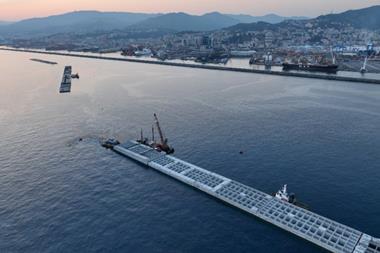





A major beach nourishment and dredging campaign is under way along the Garrão-Forte Novo coastline in Portugal’s Algarve ahead of the tourist season.
The Quarteira coastline is a prominent tourist destination, with several beaches blending into one another for about 7km.
Dredging is being done for Agência Portuguesa do Ambiente by Dutch contractor Van Oord through its subsidiary Dravo S.A., under a contract signed in early 2026.
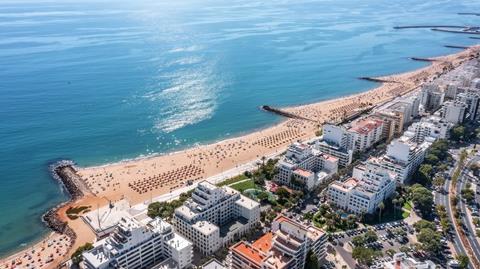
According to Van Oord, the works are intended to ‘restore and reinforce one of Portugal’s most prominent tourist beaches’, improving resilience to erosion while supporting economic activity.
The intervention covers approximately 6.5–6.7 km of coastline and will see around 1.3 million m3 of sand from about 5km offshore placed on the beaches.
Technical methodology and vessels
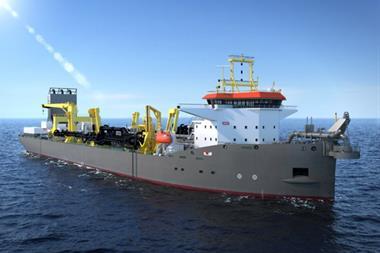
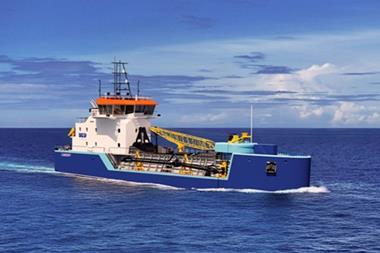
The works are being done with standard large-scale nourishment techniques centred on trailing suction hopper dredgers (TSHDs), the primary vessel type referenced in contractor methodology for this class of project. Drag arms are deployed to the seabed, sand collected and stored on an onboard hopper and the vessel then sails to shore to discharge it.
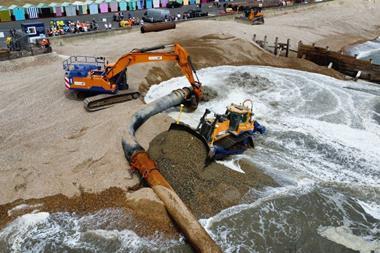
On the Algarve, floating and submerged systems have already been installed in preparation before the vessels arrive to shore, when hydraulic pumping will allow controlled placement along the sections where it is needed.
Onshore, heavy plant is used for beach profiling, shaping the nourished sand to a profile to optimise stability and wave dissipation.
According to Agência Portuguesa do Ambiente, the project forms part of Portugal’s broader coastal management strategy, using periodic nourishment to “mitigate erosion and climate change effects” while maintaining beach usability.
Quarteira’s beaches, including Praia do Forte Novo, are central to the Algarve’s tourism economy but have experienced sustained shoreline retreat due to sediment deficit and storm exposure. The current works are expected to significantly widen the beach and provide better protection against future erosion cycles.