
As the electric vessels market gathers pace, ferries are at the forefront of the transition and in answer to the demand, Lehmann Marine has pledged to expand its maritime operations in the Benelux region, Norway and Denmark and supercharge its presence. Alexander Lehmann talks to John Shepherd about the company’s foothold in the sector.
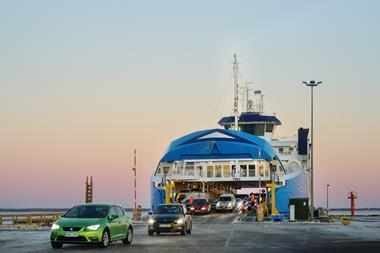
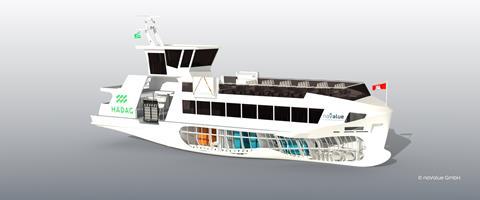
The German tech leader in maritime lithium iron phosphate (LFP) battery systems won a contract last December with HADAG Ferries for the next fully electric ferries in the Port of Hamburg.
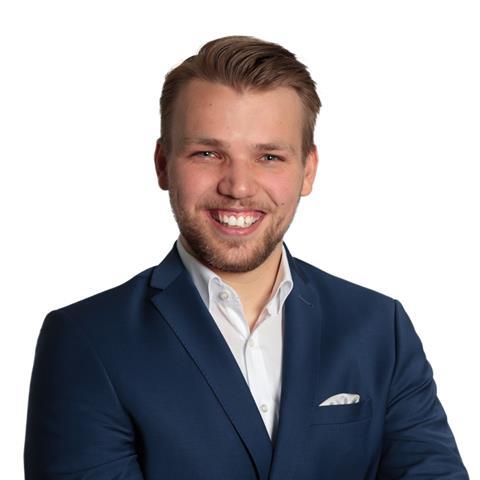
Now managing director, Alexander Lehmann has told Maritime Journal the firm is uniquely placed to become a worldwide energy powerhouse in the sector as a majority-owned business of Greece-based international battery manufacturer the Sunlight Group.
Lehmann said the Hamburg contract represented a significant increase in operational scale for the firm, providing industrial validation of its technology’s performance in high-capacity maritime environments.
This scale impacts the broader value chain, as increased production volumes allow for manufacturing efficiencies and improved cost-competitiveness across the product line, Lehmann said.
The technical specifications required for the installation have also led to developments in safety and software that are now being integrated into standard offerings.
Lehmann Marine’s technical growth is complemented by the partnership with Sunlight, which integrates its 30 years of battery manufacturing experience with LFP systems developed by Lehmann – founded in 2016 as the battery department within Germany’s Becker Marine Systems.
“Additionally, our LFP systems meet international standards for non-flammability, backed by certifications from global safety and risk management specialists DNV, Bureau Veritas, RINA and Lloyd’s Register,” Lehmann said.
“With production and service facilities located near major global shipping hubs, the joint infrastructure is designed to address the increasing demand for emission-reduction solutions.
“All of this aligns to help drive the maritime industry’s transition toward hybrid and electric propulsion through localised manufacturing and established technical standards.”
Battery systems
At the heart of Lehmann Marine’s existing product portfolio are two battery systems ― CUBE and AQUBE.
The original water-cooled system, COBRA, has been phased out and is being replaced by AQUBE.
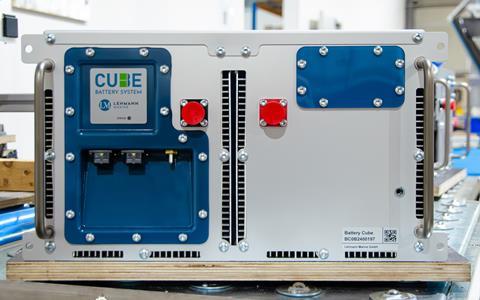
However, COBRA holds a significant place in the firm’s history after becoming, in 2021, the first maritime LFP battery system to receive DNV-type approval – a milestone that Lehmann said established the company as a pioneer in safe maritime energy storage.
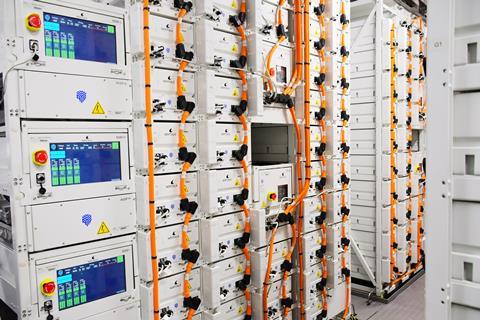
CUBE, introduced in 2023, is an air-cooled LFP system with patented cooling technology and a highly modular, flexible architecture. Its compact module design offers a clear weight and volume advantage for shipbuilding.
“With over 100 ship sets sold, it remains our best seller, serving applications from ferries and yachts to offshore workboats at up to 1C charge and discharge rates,” Lehmann said.
AQUBE is the company’s next-generation water-cooled LFP system, purpose-built for high-power applications up to 3.5C such as peak shaving and fast turnaround operations. It combines the thermal performance of water cooling with the modularity and flexibility established by CUBE. First deliveries are scheduled for the first quarter of 2027.
“Our offices in Scandinavia and Benelux open up important new opportunities to expand our presence in the maritime sector,” said Lehmann.
“These regions are home to some of the most innovative shipbuilders, operators and technology leaders in Europe, creating direct access to key decision makers and emerging projects.
“With a local footprint, we can engage more closely with customers, understand market needs faster, and position our solutions earlier in the development process. This strengthened regional presence not only increases visibility but also builds the foundation for sustained growth in the maritime market.”
And as global supply chain concerns continue to make waves across industry sectors, including maritime, Lehmann Marine stands as a prime example of how strategic mergers and acquisitions can insulate a firm from macroeconomic shocks.
Decarbonisation as hedge against instability
Lehmann said the company has successfully transitioned from a standalone specialist into a vital limb of a global energy powerhouse since becoming a subsidiary of Sunlight.
“In today’s fractured trade environment, this provides a level of de-risking that few competitors can match,” he said.
The cornerstone of this resilience is Sunlight’s deep-rooted industrial infrastructure in Greece, where a major production and R&D hub in Xanthi manufactures many of its own critical components.
This robust made-in-Europe capability serves as a natural hedge against global logistics obstacles, such as the recent maritime choke point disruptions that have paralysed traditional Asia-to-Europe shipping lanes.
Lehmann said the maritime sector is currently witnessing a strategic pivot, where ‘green resilience’ has graduated from a sustainability metric to a high-value operational asset.
Shipowners and operators are increasingly prioritising fleet decarbonisation not just for compliance, but as a hedge against the inherent instability of traditional bunker fuel supply chains.
“As these fuel networks remain under constant geopolitical pressure, the transition to battery power, backed by the localised, high-capacity manufacturing of the Sunlight-Lehmann alliance, is moving from a niche alternative to a primary trade strategy for regional and coastal shipping.
“The industry is increasingly favouring projects that utilise vertically integrated suppliers to ensure long-term vessel uptime.”