

A key milestone has been reached in the Dutch Fish Migration River project, marking a step forward for marine construction and innovative nature restoration.
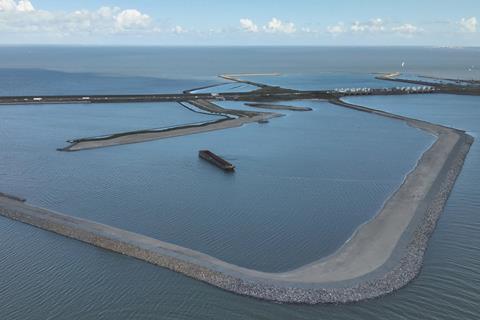
The project involving Van Oord, commissioned by the Province of Friesland, is designed to restore fish migration routes at the Afsluitdijk between the Wadden Sea and Lake IJsselmeer.
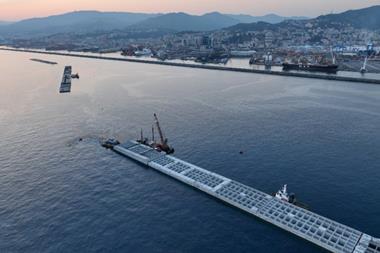
Van Oord’s final contribution was the completion of a protective dam, crucial for managing brackish water flows and shielding the Fish Migration River from wind, waves and currents.
“The successful completion of our contribution to this project is an important milestone for Van Oord. In close cooperation with the province of Friesland and many other stakeholders, we have worked for many years to ensure the sustainable implementation of the Fish Migration River,” said Ronald de Geus, Director Dredging & Infra at Van Oord.
”This project shows how innovative marine engineering and ecological recovery can reinforce each other, and really puts the Netherlands on the map. We are proud of the collective effort and of our contribution to this special initiative.”
Habitat restoration
During the project, Van Oord applied its marine civils expertise and sustainable dredging methods to minimise environmental impact.
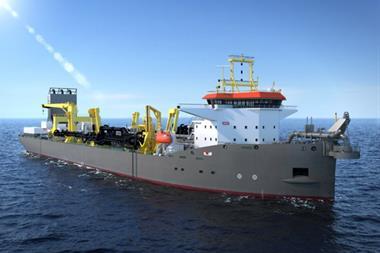
Using the cutter suction dredger Biesbosch, 400,000 cubic metres of sand were extracted locally from Lake IJsselmeer, avoiding 18,500 truck journeys.
Additionally, 20,000 tonnes of quarry stone from the Afsluitdijk reinforcement project were reused. By working with natural materials from the area, the project improves fish orientation while reducing carbon footprint.
The Netherlands will be the first country in the world to build a Fish Migration River, with full implementation set to continue in 2026.
Van Oord has been in the news alot for its nature restoration projects recently.
This month, MJ reported that the company is to breathe life into thousands of oysters to mitigate the damage caused to the North Sea bed by the growing scale of wind farms, cables and other infrastructure.
Back in August, we announced that the project to build artificial reefs and tidal pools along the Lauwersmeerdijk is to be expanded following ‘an explosion of marine life’ that has been recorded in the four years since it started.