


Handling the unique properties of HVO requires specialised software and equipment onboard, and ongoing improvements may lead to increased adoption of the renewable fuel. Michael Nash reports.
Popularity of the renewable ‘drop-in’ fuel HVO (Hydrated Vegetable Oil) has consistently grown among fleet operators for several years. Starting with small-scale pilot projects, many fleets have extended their reliance on the fuel, with a handful of trendsetters even fully transitioning from MGOs (Marine Gas Oils).
Aside from lowering emissions and not having the restraints of electrification, one of the benefits of adopting HVO in the workboat sector is that it behaves very similarly to MGOs and therefore requires minimal modification to existing vessels. However, there are a number of specialist onboard systems and pieces of technology that must be considered.
Separators and storage
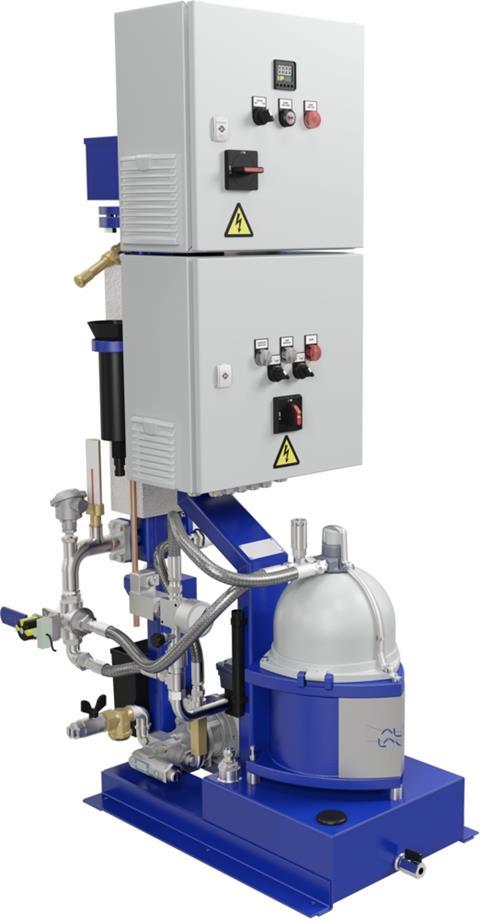
“Our equipment is used for fuel treatment in all steps onboard,” Remco de Witte, Global Application Manager for Fuel and Lube Systems, Alfa Laval, tells Maritime Journal. “From the moment the fuel is pumped into the treatment system the fuel will be fully prepared to be used by the engine. This means cleaning the fuel with our separators and heating, pressurising and providing a final filtration step with our fuel supply systems.”
As well as availability issues due to feedstock shortages and high production-related costs, de Witte explains that a key challenge for workboats using HVOs is that they must be equipped with up-to-date fuel management technology. Within this, a primary challenge is ensuring the separation system is operating effectively. This is particularly poignant considering the low density of HVO when compared to traditional MGOs. “HVO has a defined density of 770-790 kg/m3, whereas the lightest density of MGO is 820 kg/m3,” says de Witte. “This challenge is overcome by either a mechanical upgrade of our purifying machines or a software upgrade of our automatic ALCAP machines.”
Alfa Laval’s ALCAP technology is a centrifugal separation system that automatically adjusts to varying fuel densities and viscosities, eliminating the need for manual gravity disc changes. Without this software upgrade, the ALCAP system could fail, or the oil may not be properly cleaned, which could in turn lead to engine damage. However, material upgrades are not required as HVO is similar to MGO in both performance and storage parameters.
Furthermore, unlike FAME, HVO is relatively stable and does not degrade over time any faster than traditional MGOs. “HVO is described as one of the best ‘drop-in’ fuels for a reason, precisely because the changes needed for existing installations are minimal,” says de Witte.
Onboard fuel treatment systems have evolved over recent years. Recalling the low sulphur challenges of 2020, de Witte says that Alfa Laval made significant improvements across its product portfolio, ensuring its fuel treatment systems could handle the unique properties of both FAME and HVO. He expects further improvements to be made as a result of decarbonisation regulations and taxes.
Sensors and software
Another vital onboard tool for fuel management is the vessel monitoring platform. This typically provides key information to the fleet operators on performance, fuel consumption and emissions – data that is extremely important when tracking the benefits of HVO.
“HVO makes baseline measurements more important, because if you are paying a premium for a lower-emission fuel, you need to be confident you are capturing the consumption and emissions data correctly to demonstrate compliance and calculate your return,” says Veronica Söderbergh, Marketing Manager at Cetasol – a company that specialises in vessel and fleet performance software. “We adapt our approach to ensure that the density and energy content characteristics specific to HVO are correctly parameterised in the consumption model. Getting that right is essential for accurate reporting under MRV and CII frameworks.”
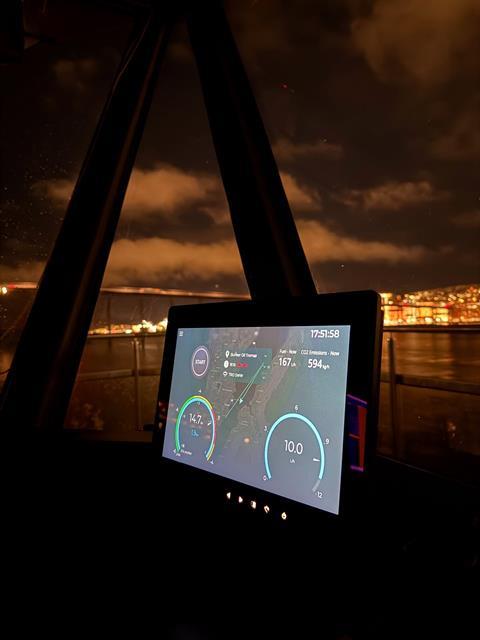
Although the software is the same, Söderbergh says that Cetasol must tweak its systems to ensure fleets can effectively use the monitoring technology when operating HVO workboats. This is because a system calibrated for MGO would give misleading numbers if it does not account for the energy content differences of HVO blends. With lower density, different cold flow behaviour, and variations in energy content depending on feedstock and blend ratio, the intrinsic characteristics of HVO have implications for how consumption is calculated when relying on volume-based measurement.
“We can then contextualise that consumption data, tying it to speed, engine load, voyage segment, and environmental conditions, so operators can see performance trends that are meaningful regardless of which fuel they’re burning.
“That level of insight becomes more valuable, not less, when you’re using a fuel that may behave differently under different operating conditions,” says Söderbergh.
Adding AI
Monitoring technology has evolved with the advent of new sensors, cloud connectivity, and advances in data modelling. In the past, one of the barriers to HVO adoption, particularly for smaller operators, is uncertainty around whether they will be able to accurately report and document the emissions benefits they have paid for with a more costly fuel.
If the measurement infrastructure isn’t in place to demonstrate compliance gains with confidence, the business case for the fuel premium weakens.
“Better fuel management systems reduce that uncertainty,” says Söderbergh. “When an operator can show, with clean, auditable data, that their HVO consumption is accurately tracked, that the CII improvement is real, and that the reporting will withstand scrutiny, it makes the decision to switch considerably easier to justify commercially. In that sense, the data layer and the fuel choice are mutually reinforcing.”
Söderbergh sees further improvement with the impact of AI and machine learning, which can add value by identifying patterns in the data and subtle correlations between trim, speed, loading condition, and influence of external factors that would otherwise be missed.
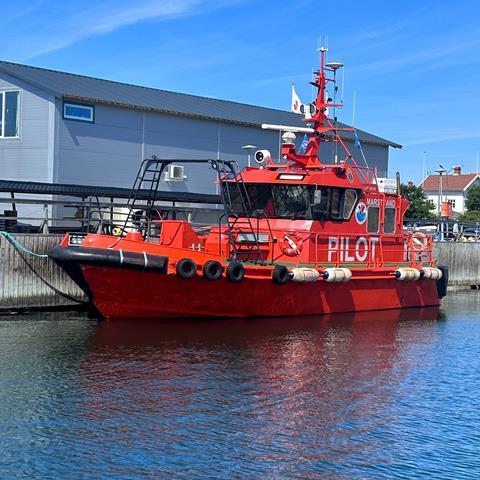
AI also shows ‘genuine near-term potential’ when considering predictive analytics. Söderbergh describes a monitoring system that gleans information on everything from the weather and tidal conditions to cargo weight and engine state. With this, fleet operators could make decisions ahead of each voyage, ensuring optimal operating profiles based on the recommendations of the platform.
“This is within reach for the workboat sector, and could make a substantial difference for operators managing tight fuel budgets on demanding operational cycles,” says Söderbergh.
Looking ahead, the continued improvement of onboard fuel management systems may encourage fleet operators to shift towards using HVO. Both de Witte and Söderbergh envisage technological improvements on the horizon, and with increasingly stringent emissions regulations, HVO could represent a viable alternative for workboats that are operationally intensive.
“The harder problem is translating that into changed decisions on the bridge and in the engine room,” says Söderbergh. “A large proportion of fuel savings are unlocked not through hardware upgrades, but through operators having reliable feedback on their own performance over time.
“When crew can see the direct relationship between their decisions and the fuel burn, idle time, speed profiles, power management, that feedback loop tends to drive meaningful change. The technology has to earn trust before it changes behaviour, and that takes time and good data presentation.”