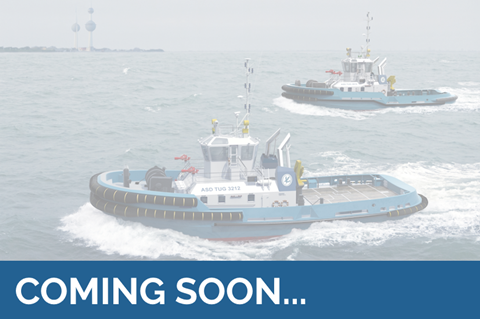


As pressure mounts on maritime operators to decarbonise, global harbour towage giant Svitzer is promoting a concept that treats emissions reductions less as a fixed technological upgrade and more as a flexible accounting mechanism.
Known as EcoTow, the solution combines biofuel use, carbon accounting and a mass-balance system that effectively allows emissions savings to be traded across operations.
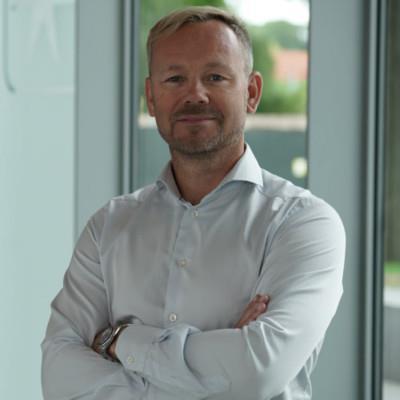
And while biofuel certainly plays a role, EcoTow is not about a single alternative fuel: instead, it is a method of allocating emissions reductions, says Sven Muchardt, Senior Global Account Manager for RoRo & Carbon Solutions at Svitzer. The mechanics of EcoTow lie in how carbon savings are tracked and distributed.
“Well, currently it’s based on biofuels. So we’re using HVO to a very large extent and we’re using the mass balance principle,” Muchardt says. “So basically regardless of where the fuel is burned, we keep track of the emission savings that we achieve and then we’re able to decarbonise our customers regardless of where they operate.”
This approach allows Svitzer to apply carbon reductions generated in one port to operations elsewhere.
“For example, if they call ports where we are not currently using biofuels, we’re still able to decarbonise their towage because we use the mass-balance principle,” he said. “We keep track of all the emission savings that we achieve in the ports where we are operating on HVO and then we’re able to distribute those emission savings to customers even if they have a call in another part of the world where we’re not operating on biofuels.”
Emissions trading for towage
The logic resembles emissions trading schemes seen in other sectors, such as the EU Emissions Trading Scheme (EU ETS), and scalability is central to EcoTow’s appeal.
“Depending on the amount of customers that we have on the EcoTow programme, if we get another customer then we’re able to scale that up in a port where the biofuel is available and hopefully at the best possible price as well,” he says. “That’s regardless of where they call within our global network.”
In practice, the system evolved from a simpler model. Initially, emissions reductions were linked directly to specific vessels operating on biofuel. Now the company has moved toward mass balance to increase flexibility.
“We’ve since then progressed to the mass-balance approach, which is much more widely accepted in the industry now,” he says. “It basically allows for a wider opportunity of decarbonisation because you’re not limited to places where biofuel is available.”
Sven says the initiative emerged from the company’s broader climate strategy rather than from regulatory pressure.
“EcoTow is basically developed as part of Svitzer’s broader decarbonisation strategy to allow us to reduce emissions within our harbour towage,” he ays. “And the decarbonisation strategy in general is based on three pillars. It’s fuel, behaviour and equipment, and basically we need to work on all three of those in order for us to achieve our net zero ambitions for 2040.”
The concept first appeared as a trial in the UK in 2021 before evolving into a global service. “EcoTow started in 2021. It was pretty much a trial locally in the UK and since then it’s progressed to a global service offering, a decarbonisation offering to our customers on a global level,” he says. “It started small and it’s expanded since then.”
Carbon accounting behind the scenes
While the concept may sound complex, Muchardt insists the calculations follow established frameworks.
“I would say it’s pretty straightforward. It follows carbon accounting principles,” he said. “It’s very structured, how it’s accounted for and what documentation is needed. We use a third-party platform for the calculation. It’s not something that we do on Excel sheets ourselves.”
The model also allows Svitzer to deploy biofuel strategically. Rather than spreading supply thinly, the company concentrates HVO use where it is most practical or cost effective.
“Typically we procure biofuel where available and where the pricing is the most attractive,” he says. “And it’s always smoother if you put the fuel into an operation where the crews already have the experience.”
He adds that operational considerations remain manageable because HVO is a drop-in fuel. “It’s not an issue to put it in new locations… it’s very much a drop-in fuel,” he says.
Voluntary decarbonisation
EcoTow currently operates on a voluntary basis, driven largely by customers seeking to reduce Scope 3 emissions.
The voluntary nature reflects the regulatory landscape in which there are, at the moment, no actual legal requirements for Scope 3 emissions for tugs.
However, reporting frameworks are beginning to shape demand.
“The emission reporting, depending on where you are in the world, there is a requirement for reporting… for example under EU CSRD,” he says. “The reduction itself is still very much voluntary.”
Participation therefore tends to come from companies with strong sustainability commitments. “EcoTow does come at a cost,” Muchardt says. “It tends to be those companies that have a very high environmental agenda that have shown interest in the product.”
The fuel component
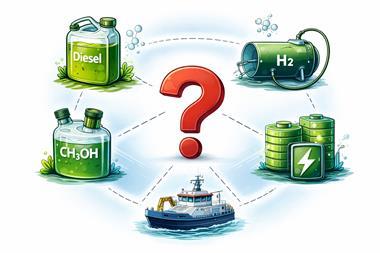
Although EcoTow is not tied to a single fuel, HVO is the one under the spotlight for Svitzer at the moment. Muchardt says performance differences are minimal and the transition from MGO to HVO is easy.
“From a tank-to-wake perspective, it’s nearly complete decarbonisation,” he says, although admits that when transport is considered, emissions will rise.
But other fuels are certainly not ruled out, and one of EcoTow’s strengths, Muchardt says, is its adaptability to future technologies.
“If the emission savings are there, then yes… other fuels could be theoretically included in some sort of decarbonisation platform,” he says.
This flexibility aligns with Svitzer’s broader decarbonisation roadmap, which combines multiple technologies.
“EcoTow is one part of our decarbonisation strategy,” Muchardt says. “Electrification is another area where we are looking.”
He highlights hybrid and electric tug developments as complementary measures, and says Svitzer is investing in battery-powered vessels alongside biofuel use.
But the accounting framework behind EcoTow could, in principle, integrate reductions from these technologies as well.
“The focus at the moment is here and now, HVO and biofuels, and also electrification,” he says. “We’re going to need more of a mix.”
A scalable model for the industry?
The broader implication is that EcoTow offers a pathway to decarbonisation without waiting for universal fuel availability. By separating where emissions reductions occur from where they are applied, the model aims to overcome logistical constraints.
“It’s very scalable,” Muchardt says.
For an industry with highly fragmented infrastructure and varied port capabilities, this could be attractive. Rather than requiring every location to adopt new fuels simultaneously, operators can aggregate reductions across their network.
Ultimately, EcoTow reflects a shift toward treating carbon savings as a transferable resource.
With voluntary uptake growing and regulatory scrutiny increasing, the concept may offer towage operators a pragmatic route to lowering emissions while the sector experiments with the next generation of propulsion technologies.
Future Svitzer
Svitzer is determined to grow, and with its target of becoming a DKK10 billion (€1.3 billion) company by 2030, it’s working hard.
Part of the future, as Muchardt says, is likely to be electric, and he references two of the company’s stand-out examples.
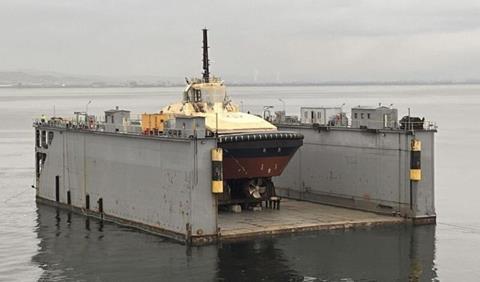
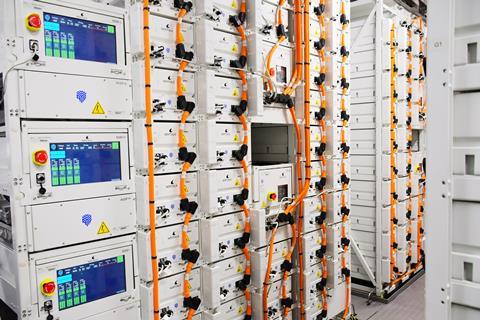
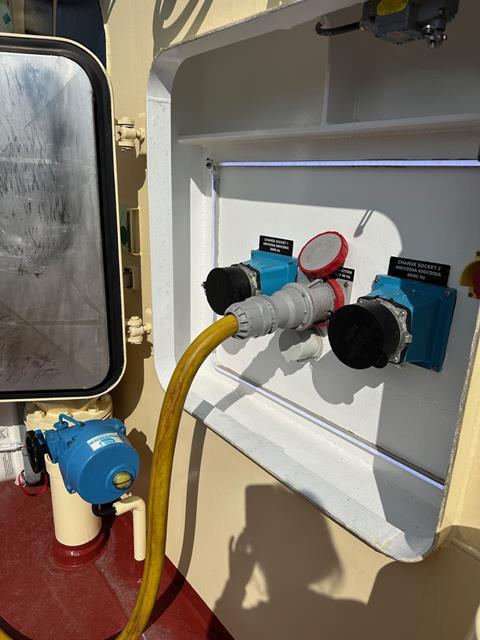
“For example the Svitzer Ingrid is a hybrid vessel with a 1,808kWh battery, equal to 23 modern electric cars,” he says, as well as being fitted with a conventional diesel engine. This, he says, reduces CO₂ emissions by 600–900 tonnes per year compared to existing tugs.
A full charge takes about 3.5 hours; but in practice, around one hour of charging is sufficient for operations and 90% of tasks can be completed on battery power, he says.
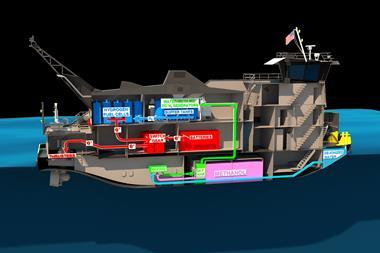
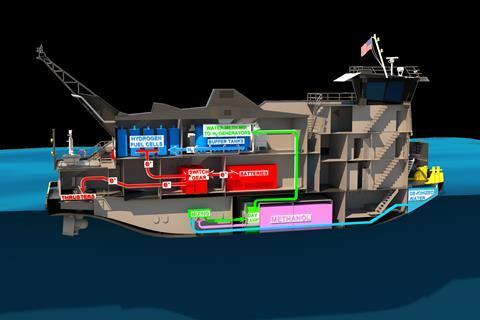
Svitzer Balder is the most powerful TRAnsverse tug the company has ever built, with a 6,000kWh battery , two 350kW methanol engines and a 2,000kW diesel engine.
She will start operations in Gothenburg before the summer.
“From a decarbonisation perspective, we have our 2040 net zero target,” says Muchardt. “And we have a pretty ambitious growth strategy, we are aiming for a 10% growth year on year, to secure new business, renew contracts and by 2030 become a 10 billion Danish krone business.”